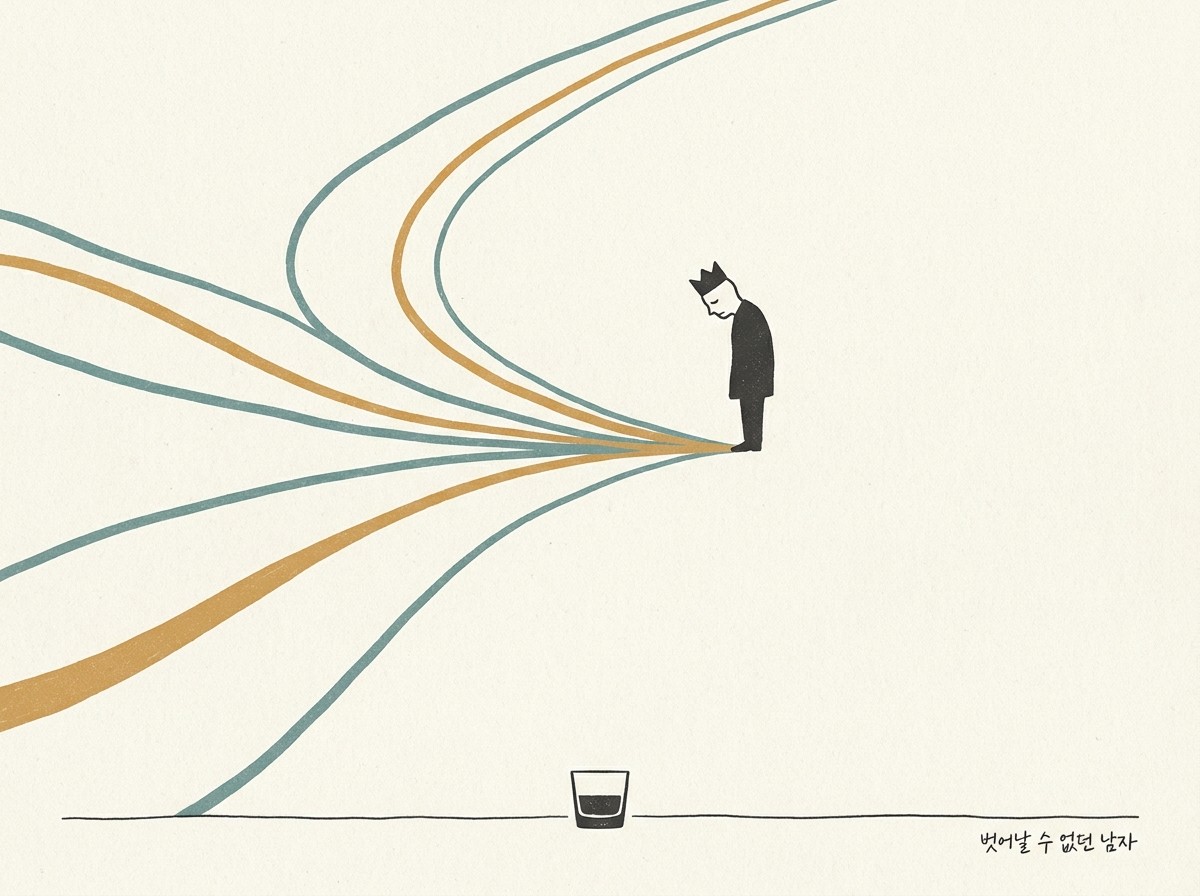
어쩌다 기계를 좀 만질 줄 안다는 소문이 집안에 돈 뒤로, 명절의 내 자리는 정해져 있다. 상이 물러나면 누군가 슬그머니 휴대폰을 들고 온다. 사진이 안 넘어간다, 글자가 갑자기 커졌다, 이상한 걸 눌렀더니 이상한 게 깔렸다. 한 대를 고치면 두 대가 오고, 두 대를 고치면 노트북이 온다. 처음엔 고마워하는 얼굴들이 좋았다. 그런데 몇 해가 지나자 이상한 일이 생겼다. 고치는 게 늦으면 내가 미안해지는 것이다. 아무도 시키지 않았는데 그 자리는 어느새 내 책상이 되어 있었다. 잘한다는 것이 먼저 있었고, 사람들이 모여든 것이 다음이었고, 역할이 굳은 것이 그다음이었다. 순서는 분명히 그랬는데, 굳고 나니 거꾸로 보인다. 마치 내가 원래부터 그 일의 임자였던 것처럼. 『오이디푸스 왕』을 다시 읽다가 자꾸 그 책상 생각이 났다.
이야기의 뼈대는 다들 안다. 코린토스의 왕자가 어느 잔치에서 취한 사내의 말을 듣는다. 너는 이 집 친자식이 아니다. 그 말이 빠지지 않아 그는 델포이로 가고, 거기서 묻던 답 대신 더 끔찍한 것을 듣는다. 아버지를 죽이고 어머니를 범하리라는 것. 그래서 달아난다. 그 일이 일어날 수 없을 만큼 먼 곳으로. 달아나던 좁은 세 갈래 길에서 그는 비키라고 밀치는 노인을 홧김에 쳐 죽인다. 피하려고 떠난 길이 정확히 그 자리로 그를 데려간 것이다. 이 남자는 왜 못 벗어났을까. 신이 정했으니까, 라고 답하고 덮기엔 자꾸 걸리는 게 있다. 매번 그를 함정으로 밀어 넣은 것이 그의 약점이 아니라 강점이었다는 것.
안에서 올라온 신탁 — 프로이트
프로이트는 『꿈의 해석』에서 이 연극을 길게 다루는데, 정작 운명에는 심드렁하다. 신의 뜻과 인간의 발버둥이 부딪히는 운명 비극 — 후대 작가들이 같은 구도로 지은 비극들은 관객을 움직이지 못했다고 그는 적는다. 무고한 사람 위로 저주가 떨어지는 광경을 우리는 구경할 뿐이라고. 그런데 오이디푸스만은 이천 년 넘게 사람을 흔든다. 왜인가. 그의 답은 서늘하다. 그 운명이 우리 것일 수도 있었기 때문에. 태어나기 전에 똑같은 저주가 우리에게도 내렸기 때문에. 어머니를 향한 첫 끌림과 아버지에게 품은 첫 미움을 그는 우리 모두의 유년이라 불렀고, 오이디푸스를 그 억눌러 잊은 소망이 현실이 된 사람으로 읽었다.
그러니 프로이트의 손에서 신탁은 슬그머니 안으로 접힌다. 밖에서 내린 저주가 아니라 안에서 올라온 소망. 델포이의 예언은 무의식이 미리 써 둔 대본이 된다. 연극이 풀리는 방식마저 정신분석을 닮았다 — 한 겹씩 덮개를 벗겨 묻어 둔 죄를 빛으로 끌어내는 과정. 끝에서 그가 알게 되는 건 바깥의 사실이 아니라 줄곧 제 안에 있던 것이고, 관객이 몸서리치는 건 그게 남의 얘기가 아니라서다.
다만 이 깔끔한 독법에는 반박의 기록이 하나 붙어 있다. 1932년 빈, 일본에서 온 분석가 고사와 헤이사쿠가 프로이트를 찾아가 독일어 논문을 건넨다. 이 삼각형이 우리에겐 맞지 않는다고. 그가 내민 것은 아사세 — 불경 속 마가다의 왕자였다. 부왕을 가두고 왕이 된 그가, 갇힌 아버지를 몰래 먹인 어머니마저 죽이려 들다가 신하의 말에 멈춘다. 아버지를 죽이고 왕이 된 자는 수없이 많아도 제 어머니를 죽인 자는 들어 본 적이 없다고. 고사와가 본 자리는 처벌의 공포가 아니라, 해치려던 어머니에게 도리어 용서받을 때 솟는 죄책이었다. 오이디푸스가 두려움으로 닫힌다면 아사세는 용서로 풀린다. 보편을 자처한 삼각형이 정작 그 도시에서 보편이 아니라고 반박당한 것이다.
등 뒤에서 따라온 것 — 융
융은 같은 신화에서 다른 곳을 짚는다. 그는 어머니를 향한 끌림을 글자 그대로의 욕정으로 읽지 않았다. 신화 속 근친의 그림이 실은 다른 것을 가리킨다고 보았다 — 다시 아이가 되어 근원으로 돌아가 거기서 새로 태어나려는 힘. 어머니는 한 사람이 아니라 모든 것이 흘러나온 자리, 무의식 그 자체다. 돌아가려는 힘이 갈 곳을 잃을 때 근친의 얼굴로 떠오를 뿐이라고.
그래서 융에게 운명은 밖에서 오는 것이 아니라 안에서 돌아 나오는 것이다. 미처 살지 못한 것, 들여다보지 못한 것이 바깥에서 운명의 얼굴로 다시 찾아온다. 거대한 손 하나가 우리를 어김없이 운명으로 이끌고 그 손이 늘 다정하지는 않다고 그는 적었다. 오이디푸스를 여기 놓으면 그의 도주가 달리 보인다. 그는 운명을 피한 것이 아니라, 자기가 누구인지 끝내 묻지 못한 그 모름에 떠밀려 갔다. 묻지 못한 출생이 삼거리에서, 들여다보지 못한 자리가 테바이의 침대에서, 바깥의 사건이 되어 기다리고 있었다.
애씀이 뒤집히는 자리 — 사상심학
내 전공의 눈으로 보면 또 다른 결이 잡힌다. 이제마는 사람의 애쓰는 마음이 끝까지 갔는데도 일이 되지 않으면, 쌓인 그 힘이 분노로 뒤집혀 밖으로 터진다고 적었다.
哀極不濟則忿怒激外.
연극의 후반부가 거의 이 한 줄이다. 그는 역병의 원인을 끝까지 캔다. 멈추라는 경고가 사방에서 온다. 입을 다물려는 눈먼 예언자를 비열한 자라 몰아세우고, 처남이 음모를 꾸몄다 의심하고, 진실을 아는 늙은 목자를 묶으라 한다. 알아 갈수록 그를 사로잡는 것은 두려움이 아니라 노여움이다. 진실이 제 뜻대로 나오지 않을 때 애씀은 정확히 분노로 뒤집힌다. 그 노여움의 밑에 자부심이 있다. 아무도 못 푼 수수께끼를 제 머리로 푼 사람. 그래서 제가 보는 것이 곧 진실이라 믿는 사람. 이제마는 한번 크게 격동한 마음은 십 년이 가도 돌아오기 어렵다고, 칼로 제 속을 베는 것과 다르지 않다고 했다. 그가 제 눈을 찌를 때 그 칼은 비유가 아니었다.
지킬 ‘나’가 없었는데 — 불교
여기까지 오면 세 독법이 한곳을 가리킨다. 욕망으로, 못 산 몫으로, 격동하는 성정으로 — 자리는 달라도 화살은 전부 그 사람 안쪽을 향한다. 불교는 그 안쪽마저 비운다. 그가 그토록 지키려 한 것이 무엇이었나. 테바이를 구한 자, 수수께끼를 푼 자, 끝까지 캐는 왕 — 그 ‘나’였다. 그런데 오래된 경전은 몸에서도 느낌에서도 생각에서도 ‘나’라 할 것은 끝내 잡히지 않는다고 말한다. 사람이란 잠시 세워 둔 이름일 뿐이라고. 그렇다면 운명을 담아 둘 그 안쪽도 단단한 그릇이 아니었다. 가장 얇은 이 한 겹이 앞의 세 화살을 슬그머니 의심하게 만든다. 운명은 정말 그의 안에 있었나.
모여드는 사람들 — 격치고
그 의심을 쥐고 연극을 처음으로 되감으면, 막이 오르는 장면에 답의 절반이 있다. 소포클레스가 맨 앞에 놓은 것은 오이디푸스의 내면이 아니다. 사람들이다. 역병에 지친 테바이 사람들이 궁 앞 제단에 모여 앉아, 예전에 스핑크스를 풀었던 그 머리로 이번에도 구해 달라고 빈다. 이제마가 만년의 거친 초고에서 오래 들여다본 것이 정확히 이 장면이었다. 그는 사람 사이의 일이 굴러가는 순서를 이렇게 적었다.
我有識見 人必歸我.
내게 식견이 있으면 사람들이 반드시 내게 모여든다. 그리고 몇 줄 아래에 모여든 다음의 일을 적었다. 사람들이 이미 내게 모였으면 나는 반드시 속이게 된다고. 구절마다 박힌 ‘반드시’는 비난이 아니라 관찰이다. 잘남이 사람을 모으고, 모임이 자리를 만들고, 자리가 행동을 떠맡긴다는, 힘이 흐르는 방향의 기록.
오이디푸스의 생애가 이 몇 줄을 그대로 산다. 스핑크스를 푼 머리가 도시를 모았고, 모인 도시가 그를 왕좌에 앉혔고, 왕좌에는 죽은 왕의 침대가 딸려 있었다. 역병이 돌자 같은 머리가 이번엔 그를 추궁자의 자리에 앉힌다. 누구보다 잘 캐는 사람이니 끝까지 캐야 하는 자리에. 아무도 그를 그 자리에서 밀어낼 수 없었다는 것도 문제였다. 도시에서 그보다 힘 있고 그보다 밝은 사람이 없었으니, 역할은 다른 데로 옮겨 가지 않고 그에게서 그대로 굳었다. 그를 거기 데려간 것은 그의 결함이 아니라 그의 쓸모였다.
그리고 그는 그 자리를 볼 수 없었다. 이제마는 다른 글에서, 제 정성이 다하지 못한 사람은 남의 거짓을 다 살필 수 없다고 적었다. 이미 흐려진 눈은 저 흐린 줄을 모른다. 왜곡은 마음먹기가 아니라 광학이다. 굳은 자리에서 보면 멀쩡한 것이 비뚤어져 보이고, 제일 잘 보는 눈이 저 자신만은 못 본다. 눈먼 예언자가 보고 두 눈 멀쩡한 왕이 못 보는 이 연극의 지독한 농담은 그러니까 농담이 아니라 광학의 정확한 그림이다. 그를 탓하려면 그 눈부터 탓해야 하는데, 그 눈은 그가 고른 것이 아니다.
프로이트와 정확히 반대 방향이다. 프로이트는 밖의 운명을 안의 소망으로 접어 넣었다. 이제마는 안에 있다던 것을 다시 밖으로 편다. 그가 어머니를 욕망해서 그 자리에 간 것이 아니라, 식견이 불러들인 자리가 그를 그렇게 앉혔다는 것. 신탁은 그의 은밀한 소망의 그림자가 아니라 그가 놓인 자리의 이름이었던 셈이다.

떠오를 뿐, 도착하지 않는
그럼 그는 그 자리를 벗어날 수 있었을까. 이제마는 자리 자체를 바꾸는 법에 대해서는 입을 다문다. 그가 말한 것은 자리를 이기는 법이 아니라, 흐름이 굳기 직전에 다른 결로 잠깐 떠오르는 일이다. 그것도 한 번으로 끝나지 않고 매번 도로 미끄러지고 매번 다시 떠오르는, 닿는 데 없는 움직임으로.
그래서 나는 그가 제 눈을 찌른 장면을 속죄로 읽지 못한다. 진실을 본 자가 스스로 보는 자이기를 그만둔 것 — 더 착해지는 일이 아니라 자리가 바뀌는 일이다. 보던 자가 못 보는 자로, 도시를 구한 왕이 도시를 더럽힌 자로. 그는 어디에도 도착하지 않는다. 다른 무엇으로 떠오를 뿐이고, 그 떠오름은 곧 추방으로 이어져 또 어딘가로 흘러간다.
명절의 책상으로 돌아온다. 우리는 대개 신탁을 받지도, 삼거리에서 누구를 죽이지도 않는다. 그러나 제가 가장 잘하는 일이 어느새 자기를 어떤 자리에 앉혀 놓는 경험은 드물지 않다. 잘하니까 맡겨지고, 맡겨지니 더 깊이 들어가고, 들어가다 보니 빠져나올 수 없는 자리에 앉아 있는 일. 그 자리에서 일이 어긋났을 때, 우리를 거기 앉힌 것이 우리의 모자람이 아니라 쓸모였다는 걸 알아차리면 조금은 덜 자책하게 될지 모른다. 자책 대신, 지금 내가 앉은 자리가 내게 무슨 역할을 떠맡기고 있는지 가만히 보는 편이 — 눈을 찌르기 전에 한 번쯤 — 나을 것이다.
— 최장혁 —
이 인물을 두 사람의 대화로 듣는다.
Ever since word got around the family that I am handy with machines, my seat at holiday gatherings has been fixed. The dishes are cleared, and someone sidles over with a phone. The photos won’t transfer. The letters have suddenly grown huge. I pressed something strange and something stranger installed itself. Fix one phone and two more arrive; fix those and a laptop appears. At first I liked the grateful faces. Then, a few years in, something odd happened: when a repair took too long, I was the one who felt sorry. Nobody had assigned me the job, yet somewhere along the way that seat had become my desk. Being good at it came first; people gathering came next; the role hardening came after that. The order was plainly so — but once the role has hardened, it reads backwards, as if I had been the owner of that desk all along. Rereading Oedipus the King, I kept thinking of that desk.
The bones of the story everyone knows. A prince of Corinth hears a drunk man let something slip at a banquet: you are not your father’s true son. The words will not come loose, so he goes to Delphi, and instead of the answer he wanted he hears something worse — that he will kill his father and lie with his mother. So he runs, toward some far place where the thing cannot happen. On that road of flight, at a narrow place where three ways meet, he kills in a flash of anger an old man who shoves him aside. The road he took to escape delivers him to exactly that spot. Why could this man not escape? Answer “because a god decreed it” and close the book — but something keeps catching. What pushed him into the trap, each time, was not his weakness but his strength.
A Prophecy Risen from Within — Freud
Freud spends a long passage on this play in The Interpretation of Dreams, and yet fate barely interests him. A tragedy of destiny, where the will of the gods collides with a man’s struggle — the later dramas built on the same frame, he notes, failed to move their audiences. We merely watch a curse fall on someone blameless. But Oedipus has shaken people for more than two thousand years. Why? His answer is cold. Because that fate might have been ours. Because before our birth the same curse was laid on us. The first pull toward the mother, the first hatred toward the father — he called this the childhood of us all, and read Oedipus as the man in whom that buried, forgotten wish came true.
So in Freud’s hands the prophecy folds quietly inward. Not a curse sent from outside but a wish risen from within. The oracle at Delphi becomes a script the unconscious had written in advance. Even the play’s unfolding resembles an analysis — peeling back cover after cover, dragging a buried guilt into the light. What he learns at the end is not a fact out in the world but something that was inside him all along, and we shudder because it is not someone else’s story.
One record of dissent is attached to this tidy reading. Vienna, 1932: a Japanese analyst named Kosawa Heisaku calls on Freud and hands him a paper in German. This triangle, he says, does not fit us. What he sets down instead is Ajase — a prince of Magadha from the sutras. Having imprisoned his father and taken the throne, Ajase moves to kill even the mother who has secretly fed the starving king, and a minister stops him: countless men have killed a father and become king, but no one has ever killed his own mother. What Kosawa saw was not the dread of punishment but the guilt that wells up when the mother one tried to harm offers forgiveness instead. Where Oedipus closes in fear, Ajase is loosened by being forgiven. A triangle that claimed to be universal was told, in the city of its birth, that it was not.
What Followed at His Back — Jung
Jung points elsewhere in the same myth. He did not read the pull toward the mother as literal desire. The incestuous image in myth, he thought, points at something else — the drive to become a child again, to return to the source and be born anew from it. The mother is not one woman but the place everything flowed from, the unconscious itself. When the drive to return loses its way, it surfaces wearing the face of incest.
For Jung, then, fate does not come from outside; it circles back from within. What has gone unlived, what has gone unexamined, returns from without wearing the face of destiny. A great hand leads us unfailingly toward our fate, he wrote, and the hand is not always gentle. Set Oedipus here and his flight looks different. He was not fleeing fate; he was being pushed along by the one thing he never managed to ask — who he was. The unasked birth waited at the crossroads; the unexamined seat waited in the bed at Thebes, as events in the outer world.
Where Striving Flips Over — Sasang Psychology
Through the eyes of my own discipline, another grain shows. Yi Je-ma (李濟馬) wrote that when the striving mind goes to its very end and the work still will not come, the force that has built up flips into rage and bursts outward.
哀極不濟則忿怒激外.
When grief reaches its limit and is not relieved, fury blazes outward. The second half of the play is nearly this one line. He digs at the cause of the plague to the very end. Warnings come from every side. When the blind seer will not speak, Oedipus calls him vile; he suspects his brother-in-law of plotting; he orders the old herdsman bound. The closer he comes to knowing, the more what grips him is not fear but fury. When the truth will not come out on his terms, striving flips over, precisely, into rage. Under the fury sits pride: the man who solved the riddle no one else could, with his own head — the man who therefore believes that what he sees is the truth. A mind once violently shaken, Yi Je-ma said, hardly returns even in ten years; it is no different from taking a knife to one’s own insides. When Oedipus puts out his own eyes, the knife is not a figure of speech.
No ‘I’ to Defend — Buddhism
By now the three readings point one way. Through desire, through the unlived portion, through a temperament that catches fire — the arrows differ in their station, but all of them point at the man’s inside. Buddhism empties even that inside. What was he defending so fiercely? The savior of Thebes, the solver of the riddle, the king who digs to the end — that ‘I.’ But the old scriptures say that in body, in feeling, in thought, no ‘I’ is finally to be found; a person is a name set up for a while. Then the inside that was to hold his fate was never a solid vessel either. This thinnest of layers quietly casts doubt on the three arrows before it. Was the fate really inside him?
The People Who Gather — Gyeokchigo
Take that doubt and wind the play back to its beginning, and half the answer is in the opening scene. What Sophocles puts first is not the inside of Oedipus. It is people. Thebans worn down by plague sit gathered at the altars before his palace, begging the head that once solved the Sphinx to save them again. This is precisely the scene Yi Je-ma studied for so long in the rough drafts of his last years, the book he called Gyeokchigo (格致藁). He wrote down the order in which things move between people:
我有識見 人必歸我.
If I have discernment, people will surely gather to me. And a few lines below, he wrote down what comes after the gathering: once people have gathered to me, I will surely deceive them. The ‘surely’ hammered into each clause is not accusation but observation — a record of the direction in which force flows: excellence gathers people, the gathering makes a seat, and the seat assigns the conduct.
Oedipus’s life walks these few lines exactly. The head that solved the Sphinx gathered a city; the gathered city set him on a throne; the throne came with a dead king’s bed attached. When plague broke out, the same head seated him this time as inquisitor — the man who digs best, and must therefore dig to the end. That no one could push him off that seat was part of the problem. There was no one in the city stronger or brighter, so the role did not pass to anyone else; it hardened on him. What carried him there was not his flaw but his usefulness.
And he could not see the seat. Elsewhere Yi Je-ma wrote that a man whose own sincerity is not yet complete cannot fully make out the falseness of others. An eye already clouded does not know it is clouded. The distortion is not a matter of resolve; it is optics. From a hardened seat, straight things look bent, and the eye that sees best is blind to itself alone. The play’s cruelest joke — the blind seer who sees, the sharp-eyed king who cannot — is not a joke at all but an exact picture of that optics. To blame him, you would have to blame the eye first, and the eye was not of his choosing.
This is the exact reverse of Freud. Freud folded the outer fate into an inner wish. Yi Je-ma unfolds what was said to be inside back out into the world. Not that Oedipus desired his mother and so arrived at that seat, but that the seat his discernment had summoned arranged him so. The prophecy was not the shadow of his secret wish. It was the name of the seat he was placed on.
Rising, Never Arriving
Could he have left the seat, then? On changing the seat itself, Yi Je-ma keeps silent. What he speaks of is not a way to defeat one’s place but a rising — for a moment, into a different grain, just before the current hardens. And not once for all: slipping back each time, rising again each time, a motion that touches no shore.
So I cannot read the scene where he puts out his eyes as atonement. The man who saw the truth ceases to be a man who sees — not a becoming-better but a change of station. The seer becomes the unseeing; the king who saved the city becomes the man who defiled it. He arrives nowhere. He only surfaces as something else, and that surfacing leads straight to exile, and he flows on to somewhere else again.
I come back to the holiday desk. Most of us receive no oracles and kill no one where three roads meet. But the experience of one’s best skill quietly seating one somewhere is not rare. Because you are good at it, it is entrusted to you; because it is entrusted, you go deeper; and having gone deep, you find yourself in a seat you cannot leave. When things go wrong in that seat, it may ease the self-blame a little to notice that what put us there was not our lack but our usefulness. Better than blame, perhaps, is to watch quietly what role the seat I now occupy is assigning me — once, at least, before putting out any eyes.