오래 바라던 자리에 마침내 올라선 사람을 가까이서 본 적이 있다. 몇 해를 매달려 얻어낸 자리였다. 결정이 나던 날 저녁엔 분명 웃었다. 그런데 며칠 뒤 다시 만났을 때 그 사람은 어딘가 맥이 빠져 있었다. 무슨 일 있냐 물으니 아니라고, 다 잘됐다고 했다. 정말 다 잘됐는데, 잘된 만큼 안이 비어버린 얼굴이었다. 원하던 걸 손에 넣었는데 왜 저럴까. 그 표정을 나는 한참 이해하지 못했다.
프로이트도 그 얼굴 앞에서 한 번 멈췄던 모양이다. 그는 짧은 글 하나에 ‘성공에 의해 파멸하는 사람들’이라는 제목을 붙였다. 평생 어떤 자리를 향해 달려온 사람이 막상 거기 닿는 순간 도리어 무너진다는 것. 그가 그 유형의 얼굴로 데려온 인물이 레이디 맥베스다. 왕관을 위해 남편의 등을 떠밀어 칼을 쥐게 한 여자. 마침내 그 왕관이 머리에 얹히고, 그러고 나서 그녀는 허물어지기 시작한다.
프로이트가 손을 든 자리
프로이트는 1916년 「정신분석 작업에서 마주친 몇 가지 성격 유형」을 쓰면서 그중 한 장을 ‘성공에 의해 파멸하는 사람들’에 내준다. 사람이 오래 바라던 것을 손에 넣는 바로 그 순간 병이 든다는 것이다. 대표로 그가 데려온 인물이 레이디 맥베스다. 그녀는 왕관을 향해 남편의 등을 떠밀고, 흔들리는 그를 다잡아 칼을 쥐게 한다. 그리고 그 왕관이 실제로 얹히자 무너지기 시작한다. 프로이트는 그 자리에서 그녀가 느낀 것을 두고 “실망 비슷한 것, 환멸 비슷한 것"이라 적는다. 목표에 닿은 자리에서 솟아난 건 충족이 아니라 그 반대였다.
문제는 왜냐는 것이다. 그는 두 갈래를 짚는다. 하나는 그녀의 본성이 실은 부드러워서 자기가 저지른 강함을 끝내 못 견뎠다는 설명. 다른 하나는 자식이 없다는 사실이다. 극 안에는 “그에게는 자식이 없다"는 한마디가 박혀 있고, 왕위를 얻어도 물려줄 핏줄이 없다는 공허가 그녀를 갉았으리라는 독법이다. 그런데 프로이트는 이 두 번째 가설을 스스로 거둬들인다. 셰익스피어가 극의 시간을 너무 촘촘히 눌러 놓아서, 자식 없음이 병으로 익을 세월이 무대 위엔 흐르지 않았다는 이유로.
그리고 여기서 그는, 정신분석의 창시자가 좀처럼 하지 않는 일을 한다. 손을 든다. 이 동기가 대체 무엇일 수 있었는지는 알아맞히기가 불가능하다고 쓴다. 그러고는 더 나아가, 텍스트의 훼손과 극작가의 알 수 없는 의도와 전설에 감춰진 본뜻 — 이 세 겹이 한데 응축된 그 모호함의 삼중층을 꿰뚫겠다는 희망은 단념해야 한다고 못박는다. 왜 레이디 맥베스가 성공한 뒤에 주저앉는가, 그 물음에 우리는 끝내 답하지 못했다고 그는 인정한다.
답을 못 찾은 자리에서 그가 택한 출구가 묘하다. 그는 다른 분석가의 손을 빌려, 맥베스와 레이디 맥베스가 따로 선 두 인물이 아니라 하나의 심리적 개체가 둘로 갈라진 반쪽들이며 한 원형에서 복제된 존재라고 본다. 그녀를 독립된 인물로 다루는 건 무의미하다는 것이다. 그러니까 그는 그녀를 닫지 못한 채, 남편과 한 몸으로 묶는 봉합으로 글을 끝낸다. 인물의 한가운데에 구멍 하나를 남겨둔 셈이다. 이 글은 그 구멍에서 출발한다.
도려낸 것은 어디로 가는가 — 융
그 구멍 앞에 다른 사람을 세워 본다. 융이라면 어떻게 봤을까.
먼저 그녀가 무대에 처음 등장해 내뱉는 말이 걸린다. 정령들을 부르며 자기에게서 여자를 지워 달라고, 머리끝부터 발끝까지 잔인함으로 채워 달라고, 후회가 드나드는 길목을 막아 달라고 한다. 가슴의 젖을 쓸개즙으로 바꿔 달라고까지 한다. 융을 한참 읽은 사람이라면 이 대목에서 한 단어를 떠올릴 것이다. 아니무스. 여자가 제 안의 무의식적 남성성에 잠식당하는 일. 융은 그렇게 점령당한 여자에게서 경직된 지성과 일종의 “악마적 정열"을 보았고, 그 자리에서 여성성이 꺼져 가는 것을 보았다. 안에 있어야 할 기능이 바깥으로 뒤집혔다는 것이다. “여자를 지워 달라"는 그 한마디 위에 이보다 정확히 포개지는 진단도 드물다.
그런데 융의 진짜 무게는 다음 한 걸음에 있다. 그는 도려낸 것이 사라지지 않는다고 본다. 그것은 의식 바깥으로 밀려나 따로 살아간다. 칸막이 뒤에서 가만히 기다리다가, 벽이 무너지는 순간 의식을 덮쳐 파괴로 뒤엎는다. 잘라 낸 콤플렉스는 제 나름의 분리된 존재를 갖는다고 그는 적었다. 레이디 맥베스는 극의 앞쪽 절반을 군림하는 인물이다. 흔들리는 남편보다 크고, 칼보다 단단하다. 융이라면 여기서 팽창을 보았을 것이다. 한쪽으로 부푼 것은 스스로를 무너뜨릴 재앙을 부른다. 일방으로 극단까지 간 것은 반드시 반대극을 키우고, 그 반대극이 어느 순간 의식의 통제를 뚫고 올라온다 — 융이 에난티오드로미아라 부른 그 뒤집힘이다.
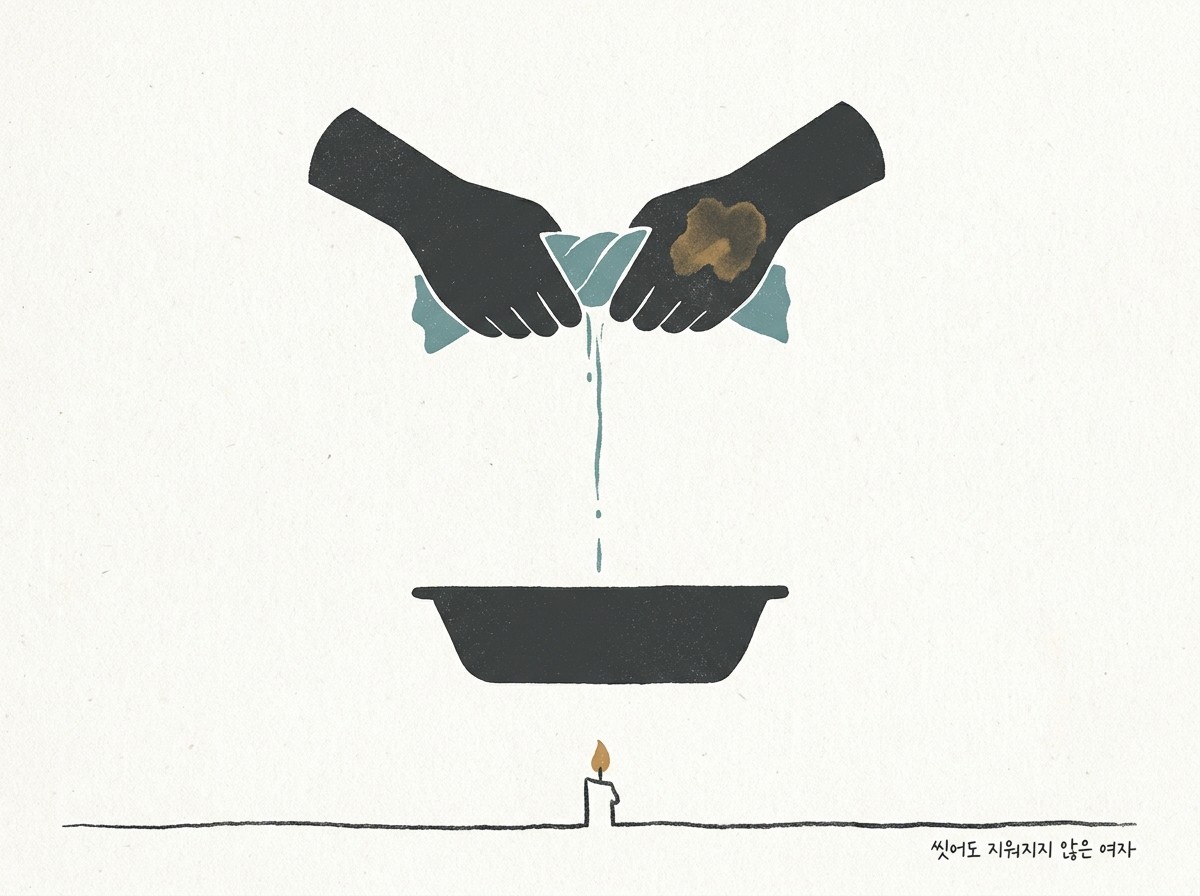
그리고 5막. 그녀는 촛불을 들고 잠결에 걸어 다니며 손을 씻는다. 씻고 또 씻는다. 융은 진료실에서 바로 이런 걸 봤다. 씻는 의례, 책임이 옅어진 채로 반복되는 강박적 행위, 일종의 자동운동. 손이 제 의지로 움직이고, 그것을 지켜보는 ‘나’는 더 이상 운전대를 쥐고 있지 않다. 앞쪽 절반에서 남편의 손에 칼을 쥐여 주던 그 단단한 의지가, 이제는 제 손이 멋대로 씻는 것을 멍하니 바라본다. 융의 언어로 옮기면 답은 분명하다. 그녀가 앞문으로 내보낸 여성성이, 후회를 막아 달라며 길목을 봉한 그 부드러움이, 벽을 넘어 자율적으로 되돌아와 그녀를 무너뜨린 것이다. 프로이트가 끝내 못 채운 “왜"를, 융은 이렇게 가장 곧장 메운다. 멈추지 않는 그 손이 곧, 내쫓긴 것이 돌아와 운전대를 쥔 모습이다.
씻는다는 착각 — 불교
그런데 이 극을 처음부터 끝까지 따라가다 보면, 한 가지 동작이 계속 반복되는 걸 알게 된다. 씻는 동작이다.
칼을 쓴 직후, 손에 피를 묻힌 채 그녀는 약간의 물이면 이 일을 깨끗이 씻어낸다고 말한다. 헹구면 된다는 것이다. 그리고 극의 끝, 잠결의 그 손에서 나오는 말은 정반대다. 아라비아의 향료를 다 부어도 이 작은 손을 향기롭게 못 한다고. 이 두 대사 사이에 불교가 그녀를 읽는 방식이 통째로 들어 있다.
『잡아함경』에 물로 죄를 씻으려던 한 바라문 이야기가 있다. 그는 강물에 몸을 담그면 지은 허물이 씻겨 나간다고 믿었다. 붓다는 그를 이렇게 돌려세운다. 물로 먼지를 씻는다 해도 그 마음은 깨끗하게 할 수 없으며, 안으로 마음을 스스로 청정하게 하면 바깥은 씻을 것이 없다고. 레이디 맥베스의 1막이 정확히 그 바라문이다. 그녀는 그 일을 피부에 묻은 얼룩으로 여겼고, 피부라면 헹궈진다고 믿었다. 여기서 이미 한 칸이 어긋나 있다. 피는 처음부터 손에 있지 않았다. 같은 경의 중아함본은 마음을 더럽히는 때가 사람을 나쁜 곳으로 데려간다고 말한다. 손의 때가 아니라 마음의 때다.
5막의 그 냄새 — 어떤 향료로도 가시지 않는 냄새 — 는 그 어긋남이 그녀 위로 무너져 내리는 순간이다. 그녀는 줄곧 마음의 때를 손의 때로 알고 다뤘고, 그래서 어떤 물도 향도 거기 닿지 못한다. 닿을 자리가 아니었기 때문이다. 손은 이미 오래전에 깨끗했고, 깨끗한 손을 씻고 또 씻는 그 동작이야말로 그녀가 끝내 못 본 범주의 착오다.
원효는 『대승기신론』을 풀면서, 업의 장애는 씻어내는 게 아니라 참회로 떠나보내는 것이라 했다. 더럽혀졌다면 반드시 뉘우쳐야 한다는 것이다. 돌아갈 곳은 대야가 아니라 마음의 돌이킴, 본래의 맑은 자리였다. 그런데 그녀는 끝내 돌이키지 않는다. 그저 씻는다. “이미 한 일은 되돌릴 수 없다"고 그녀는 절망으로 내뱉지만, 경의 귀로 들으면 그 말은 절반만 맞다. 한 일은 되돌릴 수 없다 — 거기까진 옳다. 그러나 마음은 돌이킬 수 있다. 그녀는 앞 절반에서 멈춰 서고, 뒤 절반에는 끝내 가닿지 못한다. 그렇게 손을 문지르던 채로 무대 밖에서 죽는다. 가장 오래된 진단 하나가, 이천오백 년 전 강가에서 이미 그녀의 결말을 적어둔 셈이다. 물은 그 자리가 아니라고.
억지로 쥔 단단함 — 이제마
마지막으로, 직업상 자꾸 펼치게 되는 책 하나를 편다. 이제마다.
이제마는 마음을 결이 있는 것으로 읽었다. 어떤 방향은 안에서 우러나고, 어떤 방향은 억지로 끌어와야 한다. 그리고 억지에는 값이 따른다. 그 주문 — “여자를 지워 달라"는 — 과 “용기를 나사처럼 끝까지 조이라"며 남편을 다그치던 말, 그게 억지다. 그녀는 단단함을, 잔인함을 제 결을 거슬러 끌어 올린다. 이제마의 독법에서 억지로 끌어온 기능은 헛것이 된다. 마음에서 우러난 게 아니기에, 반드시 반대편 감정으로 더 치우쳐 흘러넘친다. 강함을 억지로 쥔 사람은 그 억지의 반작용으로 슬픔 쪽으로 기운다.
그러니 후회의 길목을 막아 달라던 여자가 후회에 잠겨 무너지는 건, 이제마에게는 역설이 아니라 거의 예정된 수순이다. 막은 쪽으로 물이 더 불어난다. 빌려 쥔 단단함은 끝내 제 것이 되지 못했고, 그 빌린 값은 슬픔으로 청구되었다. 그녀가 잠결에 흘리는 건 피가 아니라, 막으려 했던 바로 그 감정이다.
닫히지 않는 사람
네 사람을 차례로 그녀 앞에 세웠는데, 답이 한자리에 모이지 않는다. 프로이트는 왜냐고 묻다가 손을 들고 구멍을 남겼다. 융은 그 구멍에서, 내쫓긴 여성성이 돌아와 운전대를 쥐는 걸 본다. 붓다는 손을 씻는 동작 자체가 자리를 잘못 짚은 것이라 하고, 이제마는 빌려 쥔 단단함이 슬픔으로 넘친 것이라 한다. 같은 붕괴를 두고 네 언어가 서로 다른 바닥을 가리킨다. 어느 하나를 정답이라 고르는 순간 나머지 셋이 끌어당긴다.
극도 그녀를 닫지 않는다. 마지막에 그녀에게는 변변한 대사 한 줄이 없다. 그녀의 죽음은 무대 밖에서 일어나고, “왕비께서 돌아가셨습니다"라는 한 줄로만 전해진다. 정작 무대 위에 남는 건 그녀의 시신 위로 흐르는 남편의 독백 — 인생은 한낱 걸어 다니는 그림자, 백치가 떠드는 이야기, 소리와 분노로 가득하나 아무것도 가리키지 않는다는 — 뿐이다. 셰익스피어조차 그녀를 닫지 않았다. 프로이트가 멈춰 선 바로 그 자리에서.
그러고 보면 첫 장면의 그 얼굴이 다시 떠오른다. 원하던 걸 손에 넣고도 안이 비어 있던 얼굴. 이제 그 빈자리가 조금 다르게 보인다. 한 가지로 설명되는 게 아니라, 여러 설명이 모이지 않은 채 나란히 서 있는 자리. 어쩌면 사람을 정직하게 읽는다는 건, 그 자리를 굳이 메우지 않고 그대로 두는 일인지도 모른다.
— 최장혁 —

I once watched, up close, someone finally reach a position they had wanted for years. They had given years to it. The evening the decision came through, they smiled—that much was real. But when I saw them again a few days later, something in them had gone slack. I asked if anything was wrong; they said no, everything had worked out. Everything had worked out, and they looked as hollow as the success was complete. They had gotten what they wanted. Why that face? For a long time I could not understand it.
Freud, too, seems to have paused before that face. He gave one short essay the title “Those Wrecked by Success”: a person who has run their whole life toward some position falls apart at the very moment of arriving there. The figure he brought in as the type was Lady Macbeth—the woman who pushed her husband’s back toward the crown and steadied his hand on the knife. The crown is finally set on her head, and after that she begins to come apart.
Where Freud Gave Up
In 1916 Freud wrote “Some Character-Types Met with in Psycho-Analytic Work,” and he gave one of its sections to those wrecked by success: a person falls ill at the very instant of getting what they had long wanted. The figure he brought in as the type was Lady Macbeth. She pushes her husband’s back toward the crown, steadies the wavering man, and puts the knife in his hand. And when the crown is actually set on her head, she begins to come apart. Of what she felt in that place, Freud writes only that it was something like disappointment, something like disillusion. What rose up at the place she had reached was not fulfillment but its opposite.
The question is why. He follows two threads. One: that her nature was in truth soft, and she could not finally bear the hardness she had committed. The other: that she had no child. Inside the play is the line “He has no children,” and the reading runs that the emptiness of winning a throne with no blood to pass it to gnawed at her. But Freud takes this second hypothesis back himself. Shakespeare has pressed the play’s time so tight that no span in which childlessness could ripen into illness ever passes on the stage.
And here he does what the founder of psychoanalysis rarely does. He gives up. What the motive could have been, he writes, is impossible to guess. And then he goes further: the damaged text, the dramatist’s unknowable intention, the buried meaning of the old legend—this threefold tangle, he says, cannot be penetrated, and we must give up the hope of doing so. Why Lady Macbeth collapses after her success—to that question, he admits, we have given no answer.
The exit he chooses from that unanswered place is the curious part. Borrowing another analyst’s hand, he comes to see Macbeth and Lady Macbeth not as two separate figures but as two halves split from a single psychical being, copied from one prototype. To treat her as an independent character, he says, is pointless. So he ends the essay unable to close her, suturing her instead into one body with her husband. He has left a hole in the middle of the person. This essay begins from that hole.
Where Does the Cut-Out Thing Go — Jung
Set someone else before that hole. What would Jung say?
First, the words she throws out when she first comes onstage catch me. Calling on spirits, she asks to be unsexed, to be filled from crown to toe with cruelty, to have the passage to remorse stopped up. She asks that the milk in her breasts be taken for gall. Anyone who has read Jung for a while will land on one word here: animus. A woman overtaken by her own unconscious masculinity. In a woman so taken, Jung saw a rigid intellect and a kind of “demonic passion,” and in that place the feminine guttering out. A function that belongs inside, he said, has been turned outside. Over “unsex me,” no diagnosis lies down more exactly.
But Jung’s real weight is in the next step. He holds that the thing cut away does not vanish. It is pushed outside consciousness and goes on living apart. It waits quietly behind the partition, and the moment the wall falls it overwhelms the conscious life and turns it to wreckage. A severed complex, he wrote, takes on a separate existence of its own. Lady Macbeth reigns over the play’s first half. She is larger than her wavering husband, harder than the knife. Here Jung would have seen inflation. What has swelled to one side dooms itself to the calamity that strikes it dead. What has gone to one extreme inevitably breeds its opposite, and that opposite, at some point, breaks through the conscious control—the reversal Jung called enantiodromia.
And then the fifth act. She walks in her sleep with a candle and washes her hands. Washes them, and washes them again. Jung saw exactly this in his consulting room: washing ceremonies, a compulsive act repeated with responsibility thinned out, a kind of automatism. The hand moves by its own will, and the “I” that watches it no longer holds the wheel. The hard will that in the first half put the knife in her husband’s hand now watches, blankly, as her own hands wash of their own accord. Put into Jung’s language, the answer is plain. The femininity she sent out the front door, the softness whose passage she had sealed against remorse, has come back over the wall on its own and brought her down. The “why” Freud could never fill, Jung fills most directly of all. That hand that will not stop is the exiled thing, returned, with its hand on the wheel.
The Illusion of Washing — Buddhism
Yet if you follow this play from beginning to end, one motion keeps repeating. The motion of washing.
Just after the knife, her hands bloodied, she says a little water will clear them of the deed. A rinse will do. And at the end of the play, the words from that sleepwalking hand are the exact reverse: all the perfumes of Arabia will not sweeten this little hand. Between these two lines lies the whole of how Buddhism reads her.
In the Saṃyukta Āgama (雜阿含經, Jap-aham-gyeong) there is a brahmin who tried to wash his sins away with water. He believed that bathing in the river would rinse off the wrongs he had done. The Buddha turns him around like this: though you wash off dust with water, you cannot cleanse the mind with it; make the mind clean within, and there is nothing outside left to wash. Lady Macbeth’s first act is precisely that brahmin. She took the deed for a stain on the skin, and a stain on the skin, she believed, rinses off. One step is already out of place here. The blood was never on her hands to begin with. The same sutra in the Madhyama Āgama says that the defilements that foul the mind—心穢 (sim-ye, the mind’s stains)—carry a person to a bad place. Not the hand’s stain, but the mind’s.
The smell in the fifth act—the smell no perfume can lift—is the moment that misplacement collapses on top of her. All along she has handled the mind’s stain as the hand’s, and so no water, no scent, reaches it. It was never the place to reach. The hands were clean long ago, and that very motion of washing clean hands and washing them again is the category mistake she never sees.
Wonhyo (元曉), unfolding the Awakening of Faith (大乘起信論), said that karmic obstruction—業障 (eopjang)—is not something washed off but something released through repentance. If you have been defiled, you must repent. The place to return to was not a basin but the turning of the mind, the originally clear ground. But she never turns. She only washes. “What’s done cannot be undone,” she says, in despair—and heard with the sutra’s ear, that line is only half right. What is done cannot be undone; that far it is true. But the mind can be turned. She stops at the first half and never reaches the second. And so, still rubbing her hands, she dies offstage. One of the oldest diagnoses had already, on a riverbank twenty-five hundred years ago, written her ending: the water is not the place.
A Hardness Forced Into the Hand — Yi Je-ma
Finally, I open a book my work keeps pulling me back to. Yi Je-ma (李濟馬).
Yi Je-ma read the mind as something with a grain. Some directions rise from within; some must be dragged in by force. And force exacts a price. That spell—“unsex me”—and the goading of her husband to “screw his courage to the sticking-place”—that is force. She drags hardness, cruelty, up against her own grain. In Yi Je-ma’s reading, a function dragged in by force becomes a hollow thing. Because it does not rise from the heart, it must spill, harder, toward the opposite feeling. A person who grips hardness by force tips, by the recoil of that force, toward grief.
So that the woman who asked to have the passage to remorse blocked should drown in remorse and come apart is, to Yi Je-ma, not a paradox but nearly a foregone order. The water rises higher on the side you dammed. The hardness she borrowed never became her own, and the price of the loan was billed in grief. What she sheds in her sleep is not blood but the very feeling she tried to wall out.
A Person Who Will Not Close
I set four people before her in turn, and the answers do not gather in one place. Freud asked why, gave up, and left a hole. In that hole Jung sees the exiled feminine return and take the wheel. The Buddha says the very motion of washing has mistaken its place; Yi Je-ma says a borrowed hardness has overflowed into grief. Four languages point to four different floors beneath the same collapse. The instant you choose one as the answer, the other three pull at it.
The play, too, will not close her. At the end she has not a single proper line. Her death happens offstage, carried in by the one line “The queen, my lord, is dead.” What stays on the stage is her husband’s speech over her body—that life is but a walking shadow, a tale told by an idiot, full of sound and fury, signifying nothing. Even Shakespeare did not close her. At exactly the place where Freud came to a stop.
And then that first face comes back to me. The face that was hollow even with what it had wanted in hand. Now the hollow looks a little different. Not a thing explained by one account, but a place where several accounts stand side by side without gathering. Perhaps to read a person honestly is to leave that place unfilled, just as it is.