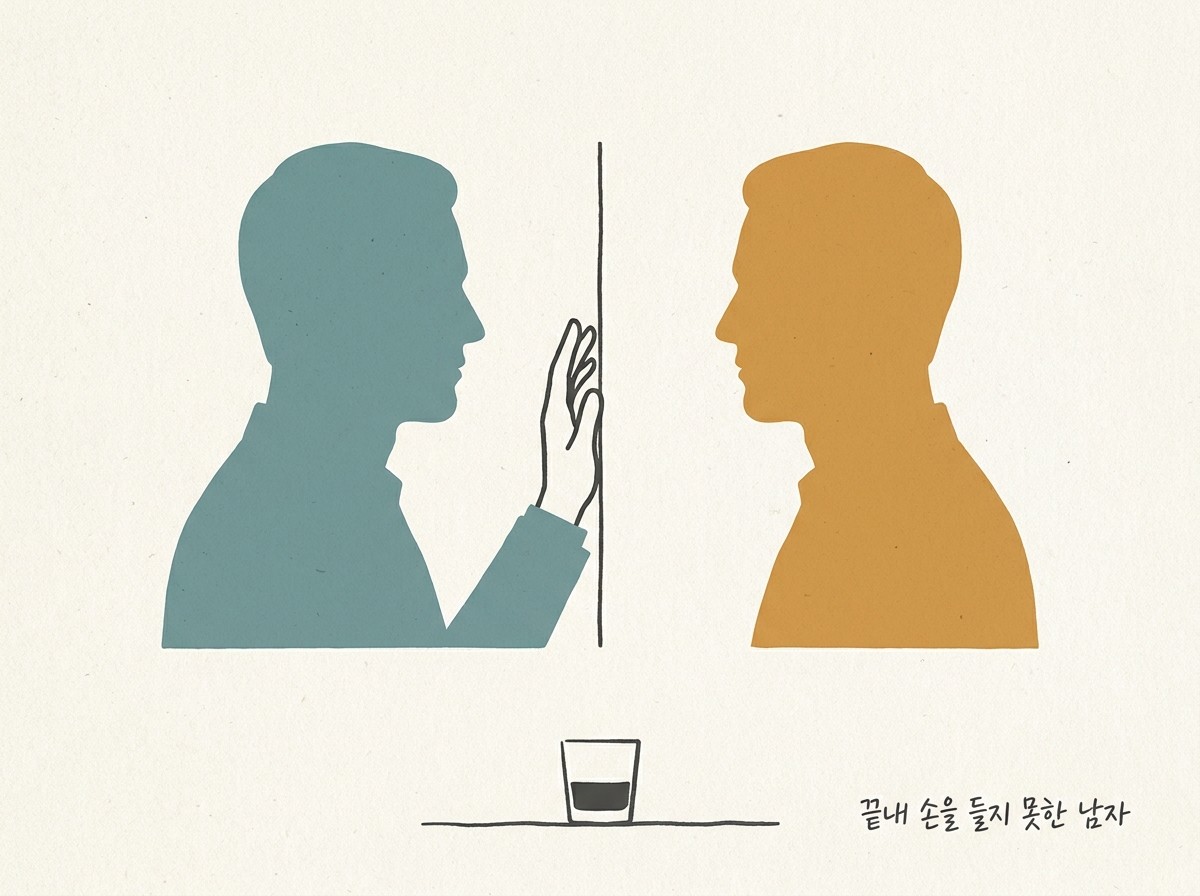
며칠째 답장 하나를 미루고 있었다. 어려운 내용도 아니었다. 무슨 말을 쓸지는 처음부터 알고 있었고, 머릿속에서는 이미 여러 번 다 써두었다. 그런데 막상 화면 앞에 앉아 커서가 깜빡이기 시작하면 손이 멈췄다.
그날도 다른 일은 평소처럼 다 했다. 진료를 보고, 처방을 내고, 급한 전화에는 곧바로 답했다. 꼭 그 하나만, 가장 쉬운 그 하나만 손이 가지 않았다. 못 쓰는 게 아니다. 안 쓰는 것도 아니다. 쓰려고 하는데 안 써진다. 이 셋은 분명히 다른데, 그 차이를 설명하려 들면 말이 엉킨다.
그날 저녁 책장에서 햄릿을 꺼낸 건 거의 우연이었다. 햄릿은 무능한 사람이 아니다. 휘장 뒤에 숨은 폴로니우스를 망설임 없이 찔러 죽이고, 자기를 팔러 온 두 친구를 영국으로 보내 처형되게 만든다. 무엇이든 한다. 단 하나, 삼촌을 죽이는 그 하나만 못 한다. 사백 년 동안 사람들은 그를 우유부단하다고 불렀다. 나는 그 말이 늘 답이 아니라 회피처럼 들렸다.
사실 흔한 이야기처럼 보이기도 한다. 바람난 아내를 죽이지도 못하고, 떠나지도 못하고, 이러지도 저러지도 못해 술로 무너지는 남자. 그런 남자라면 우리는 이미 안다. 감옥이 무섭고, 자식이 눈에 밟히고, 미운데 미워만 할 수는 없는 미련이 남아서. 이유가 다 밖에 있다. 그래서 이해는 돼도 들여다볼 건 없다. 그럴 만하네, 하고 끝난다.
햄릿이 그 남자와 갈라지는 건 한 지점이다. 햄릿에게는 밖의 이유가 하나도 없다. 왕자이고, 복수는 정당하다. 감옥 갈 일도, 눈에 밟힐 자식도, 삼촌을 향한 미련도 없다. 죽일 기회조차 여러 번 있었다. 바깥에 아무 이유가 없는데 손이 묶인다. 그러면 이유는 안에 있다는 뜻인데, 그 안을 들여다보기 시작하면 바닥이 보이지 않는다. 그리고 그 바닥 없음을 만든 건, 삼촌이 그냥 적이 아니라 거울이라는 사실 하나다.
거울이 된 적 — 프로이트
프로이트라면 이 묶임을 뭐라고 불렀을까. 『꿈의 해석』의 한 대목에서 그는 의외로 짧게, 거의 지나가듯 햄릿을 짚는다. 햄릿의 문제는 우유부단이 아니다. 그는 무엇이든 할 수 있다. 아버지를 없애고 그 자리를 어머니 곁에서 차지한 그 남자, 자기 어린 시절의 억압된 소원이 실현된 것을 눈앞에서 보여주는 그 남자를 죽이는 일만 빼고. 삼촌은 햄릿이 어릴 적 아버지에게 몰래 품었던 그 소원을 현실에서 대신 저질러버린 사람이다. 그를 베면 햄릿은 자기 자신을 베는 셈이 된다. 그래서 복수를 떠밀어야 할 혐오가 방향을 틀어 자기를 향한다. 자기가 벌하려는 죄인보다 자기도 나을 게 없다는 가책으로.
여기서 이 희곡의 농담이 드러난다. 오이디푸스 소원 자체는 흔하다. 누구나 어릴 때 그런 소원을 품고, 눌러서 어른이 된다. 보통은 그걸 평생 무의식에 묻어둔 채 산다. 건드릴 일이 없으니까. 그런데 햄릿에게는 그 소원을 실제로 해버린 사람이 눈앞에 있다. 형을 죽이고 형수를 차지하는 짓을, 삼촌이 대신 저질렀다. 흔해 빠진 소원이 대행자 한 명 때문에 최악의 덫이 된다. 보통 사람은 소원을 묻으면 그만이지만, 햄릿은 자기 소원이 왕관을 쓰고 식탁 건너편에 앉아 있는 걸 매일 봐야 한다. 묻을 자리가 없다.
그러니 햄릿이 못 하는 건 삼촌 살해 하나가 아니다. 삼촌을 죽이려 하면 양심이 막아선다. 너도 같은 소원을 품지 않았느냐고. 그런데 죽이지 않아도 같은 양심이 또 막아선다. 아버지의 명을 저버린 자라고. 어느 쪽으로 가도 자기를 단죄하는 목소리가 먼저 도착한다. 죽여도 무너지고, 안 죽여도 무너진다. 출구가 없는 덫이다. 양심이 우리 모두를 겁쟁이로 만든다고, 그는 말한다.
여기까지는 깔끔하다. 너무 깔끔해서 마음에 걸린다. 프로이트의 이 도식은 삼촌을 못 죽이는 것 하나만 설명한다. 정작 햄릿이라는 사람 전체가 검게 물드는 건 설명하지 못한다. 한 사람을 못 죽이는 국소의 마비가 어떻게 세상 전체를 잡초 무성한 폐원으로 보이게 하고, 살아 있는 것 자체를 버겁게 하고, 끝내 죽음에 끌리게 하는가. 가책 하나로는 이 전면적 어둠이 안 된다. 프로이트는 「슬픔과 우울」에서 햄릿을 한 번 더 부르면서도, 정작 그 우울은 들여다보지 않는다. 남의 이론을 비추는 거울로만 잠깐 쓰고 지나간다.
그러니 물음은 하나로 좁혀진다. 햄릿은 왜 우울한가. 삼촌을 못 죽이는 건 알겠다. 그런데 왜 그 막힘이 사람을 통째로 가라앉히는가. 프로이트가 닫지 않고 둔 그 자리에, 다른 손들이 들어온다.
도려낸 사랑 — 융
융이라면 그 우울을 정반대로 봤을 것이다. 프로이트에게 억눌린 게 새어나온 건 고장이다. 도로 눌렀어야 할 게 새어나와 병이 됐다는 것. 융에게는 무의식이 떠오르는 게 누수가 아니라 올라오려고 올라온 것이다. 그는 우울을 두고, 의식이 비고 무의식이 활성화된 상태이며 그 내용이 의식화되어야 비로소 효력을 낸다고 적었다. 바깥세상에서 에너지가 다 빠져 안으로 내려간 것. 그 내려감은 병이 아니라 하강이다. 그러니 햄릿이 무너진 건 무의식이 올라와서가 아니라, 올라온 그것을 받아 안지 못해서다. 받았으면 변형이 됐을 것을, 못 받아 함몰만 됐다.
그런데 햄릿이 받지 못한 그것은 무엇이었나. 융이라면 어머니를 짚었을 것이다. 한 남자가 마음에 지니는 여성의 상은 늘 어머니에게서 처음 빚어진다고 그는 말한다. 영혼의 상을 처음 지는 이는 언제나 어머니이고, 나중에 그것은 그의 마음을 흔드는 여자들이 이어받는다는 것. 햄릿에게 그 상이 무너지는 순간이 있다. 아버지가 죽은 지 한 달도 안 되어 삼촌과 재혼한 어머니. 약한 자여, 그대 이름은 여자라는 그 말은 어머니를 향한 말이다. 그러나 융이 보았을 핵심은, 그 말이 어머니 한 사람에서 멈추지 않는다는 데 있다. 어머니의 배신이 방아쇠가 되어, 그 밑에 깔려 있던 여성의 상 전체가 깨어난다. 한번 깨어난 그 상은 눈앞의 모든 여자에게 덧씌워진다.
오필리아가 그 증거다. 오필리아는 아무 잘못도 하지 않았다. 그런데 햄릿은 그녀를 어머니만큼이나 잔인하게 내친다. 수녀원으로 가라고. 어머니 한 사람으로는 이 잔인함이 설명되지 않는다. 융으로 보면 깔끔해진다. 햄릿이 미워하는 건 어머니도 오필리아도 아니라, 두 여자에게 동시에 덧씌워진 자기 안의 더럽혀진 여성상이다. 밖으로 나가 한 여자에게 가닿았어야 할 사랑이, 깨어진 그 상에 막혀 안으로 감겨든다. 밖으로 못 간 사랑이 곧 그의 멜랑콜리다.
부딪혀 굳은 면 — 이제마
여기까지 두 사람을 따라오면, 한 가지가 자꾸 걸린다. 이게 정말 그 사람 안에서만 일어난 일일까. 햄릿은 처음부터 우울한 사람이 아니었다. 프로이트조차 그가 본래 멀쩡했다고 적는다. 그 우울은 삼촌이 형을 죽이고 어머니를 차지한 바로 그 일과 함께 시작된다. 그러니까 그것은 햄릿이 혼자 키운 게 아니라, 햄릿이라는 한 사람과 삼촌이라는 또 한 사람이 부딪힌 자리에서 생겨난 것이다.
이제마라면 그 부딪힌 자리를 들여다봤을 것이다. 그가 평생 들여다본 게 그거였으니까. 사람과 사람이 만나면 둘 사이에 어떤 면이 생긴다. 한쪽이 어느 방향으로 굳어 있으면 그 면이 함께 굳고, 굳은 면에서는 멀쩡한 것조차 비뚤어져 보인다. 이제마는 이 비뚤어짐이 마음먹기의 문제가 아니라고 했다. 굳은 유리를 통과한 빛이 휘듯, 그건 의지가 아니라 광학이다. 햄릿이 삼촌에게서 자기를 본 것은 그렇게 보기로 한 게 아니다. 두 사람이 같은 소원을 품었다는 지독한 우연이, 둘이 맞닿은 면을 거울로 굳혀버린 것이다.
한번 굳은 면은 다른 모든 면으로 번진다. 어머니가 굳었고, 그 굳음이 오필리아로 옮아갔다. 오필리아가 무고한데도 어머니의 얼굴로 보이는 건 햄릿이 잔인해서가 아니라, 그가 이미 굳은 면 너머로만 세상을 보게 되었기 때문이다. 이제마는 한 집안에서 선과 악이 서로 갈리면 쇠망이 따르고, 충신과 아첨이 다투면 살육이 반드시 온다고 적었다. 엘시노어가 그 갈리는 면이다. 부딪힌 두 사람이 점점 더 많은 이를 그 면으로 끌어들이고, 끝내 거의 모두가 그 위에서 죽는다.
그런데 면은 바꿀 수 있는 게 아니다. 아버지는 이미 죽었고 어머니는 이미 재혼했다. 굳은 자리를 햄릿이 되돌릴 길은 없다. 이제마가 내놓은 것도 면을 이기는 법이 아니었다. 그는 다만, 굳은 길로 흘러가기 직전에 다른 결로 잠깐 비켜서는 것을 말했다. 도달점은 없다. 매번 같은 자리로 되돌아오고, 이긴 판은 한 번도 없다. 그저 굳어가는 그 찰나에 한 번씩 비켜서는 것. 햄릿은 끝내 그 비켜섬에 이르지 못한다. 굳은 면 위에 그대로 굳어, 행동 대신 말을, 다시 말을, 또 말을 쏟는다.
닫히지 않은 문 — 불교
그러니까 지금까지의 세 사람은 결국 같은 자리에 서 있다. 햄릿이 누구와 부딪혀 어떻게 굳었는지를 묻는 자리. 프로이트의 거울도, 융의 깨어난 상도, 이제마의 굳은 면도, 전부 부딪힘을 전제한다. 누구와 부딪혔고, 무엇이 굳었고, 그게 어떻게 번졌나.
그런데 책장 한 칸 옆에는 그 질문 자체를 무너뜨리는 책들이 있다. 불교라면 이렇게 물었을 것이다. 그 면이 정말 있긴 한가. 햄릿이 갇혔다는 그 감옥은, 그가 실재라고 붙잡은 것 아닌가. 거울에 비친 게 나라고 움켜쥐고, 굳은 면을 진짜라고 끌어안고, 그 위에서 괴로워하는 것 자체가 집착이다. 불교에는 이 면을 푸는 법이 없다. 면을 내려놓는 길만 있다. 풀 방법이 없는 게 결함이 아니라, 그게 그 자리의 성격이다.
햄릿은 그 길 앞까지 간 적이 있다. 광대 요릭의 해골을 손에 들고, 한때 자기에게 입 맞추던 입술이 어디로 갔느냐고 물을 때. 그는 살아 있는 모든 게 한 줌 흙으로 돌아간다는 걸 흘끗 본다. 굳은 면이 통째로 부질없어지는 그 순간. 그러나 그는 본 것을 내려놓지 못하고 도로 생각으로 움켜쥔다. 무엇을 읽느냐고 묻자 그는 답한다. 말, 말, 말. 무상을 봤으나 내려놓는 법이 없으니, 흘끗 본 그것마저 다시 의심으로, 말로 굳어버린다. 불교는 그래서 햄릿에게 닫히지 않은 문으로만 존재한다. 열고 들어가면 감옥이 사라지는 문인데, 그는 그 앞에서 문고리 대신 자기 말을 만지작거린다.
메울 수도 비울 수도 없는
그래서 사백 년이 지나도 햄릿은 닫히지 않는다. 우유부단으로 닫으면 그가 칼을 뽑던 손이 남고, 오이디푸스로 닫으면 자기를 못 죽이던 망설임이 남는다. 어떤 한 마디로 닫아도 무언가가 비어져 나온다. 우리가 자꾸 그를 한 가지로 설명하려다 실패하는 건, 그의 우울이 메워야 할 빈칸이어서가 아니다. 그것은 빈칸이 아니라 두께다. 한 사람 안의 여러 겹과, 두 사람이 맞닿아 굳은 면이 한꺼번에 겹쳐 있어서, 어느 하나로도 덮이지 않는 두께. 세 사람은 그 두께를 저마다 쌓아 보이고, 불교만은 그 두께마저 내려놓으라 한다. 그러나 햄릿은 끝내 내려놓지 못한다. 그 못 내려놓음 안에서 죽는다. 메워지는 구멍이었다면 누군가 진작 메우고 끝났을 것이다. 비울 수 있는 두께였다면 진작 비워졌을 것이다. 둘 다 안 되니, 그는 사백 년째 그 자리에 그대로 있다.
책을 덮고 다시 화면 앞에 앉았다. 커서는 같은 자리에서 깜빡이고 있었다. 다만 그 멈춘 손이 조금 덜 낯설었다. 할 수 있는데 안 되는 그 자리에, 누구나 한 번쯤은 앉는다. 다행히 나의 것은 답장 하나였다. 부딪혀 굳은 면도 없었고, 왕국이 걸려 있지도 않았다. 나는 천천히 첫 줄을 썼다.
— 최장혁 —
이 인물을 두 사람의 대화로 듣는다.
For several days I had been putting off one reply. Nothing difficult about it. I had known from the start what I wanted to say, had drafted it in my head many times over. But the moment I sat down before the screen and the cursor began to blink, my hand stopped.
That day I did everything else as usual. Saw patients, wrote prescriptions, answered the urgent calls at once. Only that one thing—the easiest one—my hand would not go to. It was not that I could not write it. Not that I would not. I meant to, and it would not come. The three are plainly different, and yet the moment I try to explain the difference, the words tangle.
That I took Hamlet down from the shelf that evening was nearly an accident. Hamlet is not a man without capacity. He runs Polonius through behind the arras without a flicker of hesitation; he sends the two friends who came to sell him off to England, to be executed there. He can do anything. Only one thing—killing his uncle—he cannot. For four hundred years people have called him irresolute. To me that word has always sounded less like an answer than like a way of looking away.
It can, in fact, look like a common story. A man who can neither kill his unfaithful wife nor leave her, who can do nothing either way and falls apart over drink. A man like that we already understand. Prison frightens him; the children stay before his eyes; he hates her and yet cannot only hate, some attachment lingers. The reasons all lie outside him. He can be understood, then, but there is nothing in him to look into. That figures, we say, and it ends there.
Where Hamlet parts from that man is a single point. Hamlet has not one reason outside himself. He is a prince; his revenge is just. No prison waits for him, no child to stay before his eyes, no lingering tenderness toward his uncle. He even has the chance to kill, more than once. There is nothing outside, and still the hand is bound. Which means the reason is inside—and the moment you begin to look in there, you see no bottom. And what made that bottomlessness is a single fact: the uncle is not simply an enemy but a mirror.
A Mirror for an Enemy — Freud
What would Freud have called this binding? In one passage of The Interpretation of Dreams he marks Hamlet briefly, almost in passing. Hamlet’s trouble is not irresolution. He can do anything—except kill the man who put away his father and took his place at his mother’s side, the man who shows him, realized before his eyes, the repressed wishes of his own childhood. The uncle has carried out, in the world, the very wish Hamlet harbored in secret toward his father as a boy. To cut him down is to cut himself. And so the loathing that ought to drive the revenge turns and points inward—toward the reproach that he is no better than the criminal he means to punish.
Here the play’s joke shows itself. The Oedipal wish in itself is common. Everyone holds such a wish as a child and, by pressing it down, becomes an adult. Most people keep it buried in the unconscious all their lives. Nothing ever touches it. But before Hamlet stands the man who actually did it. The thing he only dreamed of and buried—killing the brother, taking the brother’s wife—the uncle has done in his place. A worn, common wish becomes the worst of traps because of one stand-in. An ordinary man can bury the wish and be done; Hamlet must watch his own wish sit across the table wearing a crown, every day. There is nowhere to bury it.
So what Hamlet cannot do is not the one killing. If he moves to kill the uncle, conscience steps in his way: did you not hold the same wish? But if he does not kill, the same conscience steps in again: you, who forsook your father’s command. Whichever way he turns, the voice that condemns him arrives first. Kill, and he goes down; spare him, and he goes down. It is a trap with no exit. Thus conscience does make cowards of us all, he says.
This far it is clean. So clean it troubles me. Freud’s scheme explains only the one thing—the not-killing of the uncle. What it does not explain is the whole man staining dark. How does a local paralysis, the failure to kill one man, make the entire world look like an unweeded garden run to seed, make being alive itself a weight, draw him at last toward death? Reproach alone will not carry this total darkness. In “Mourning and Melancholia” he calls Hamlet up once more and, even there, does not look into the melancholy itself. He uses him briefly as a mirror to light another man’s theory, and goes on.
So the question narrows to one. Why is Hamlet melancholy? That he cannot kill his uncle—granted. But why does that blockage sink the whole man? Into the place Freud left unclosed, other hands reach.
The Severed Love — Jung
Jung would have seen that melancholy the other way round. For Freud, the repressed seeping to the surface is a breakdown—what should have been pressed back down has leaked out and turned to illness. For Jung, the unconscious rising is not a leak but a thing that rose because it meant to. Of depression he wrote that it is a state in which consciousness has emptied and the unconscious gone active, and that its contents take their effect only once they are raised into consciousness. The energy has drained from the outer world and gone down, inward. That going-down is not illness but a descent. So Hamlet broke not because the unconscious rose, but because he could not take in what rose. Taken in, it would have transformed him; not taken, it only caved.
But what was it Hamlet could not take in? Here Jung would have pointed to the mother. The image of woman a man carries within, he says, is always first shaped by the mother; the first to bear the image of the soul is always the mother, and later the women who move his heart inherit it. For Hamlet there is a moment when that image collapses—a mother remarried to his uncle before a month was out. Frailty, thy name is woman: the line is aimed at the mother. But the heart of what Jung would have seen is that it does not stop at the mother alone. Her betrayal is the trigger, and beneath it the whole buried image of woman wakes. Once woken, it is laid over every woman before his eyes.
Ophelia is the proof. Ophelia has done nothing wrong. And still Hamlet casts her off as cruelly as he casts off his mother. Get thee to a nunnery. The mother alone will not explain that cruelty. Through Jung it comes clear: what Hamlet hates is neither his mother nor Ophelia but the defiled image of woman within him, laid over both at once. The love that should have gone out and reached one woman, blocked by that broken image, winds back inward. Love that could not get out—that is his melancholy.
A Surface Hardened by Collision — Yi Je-ma
Follow the two of them this far, and one thing keeps catching. Did all of this really happen inside the man alone? Hamlet was not melancholy from the start. Even Freud writes that he was sound to begin with. The melancholy begins with the very event of the uncle killing the brother and taking the mother. Which means it is not something Hamlet raised alone, but something that came up in the place where one man, Hamlet, struck against another, his uncle.
Yi Je-ma (李濟馬) would have looked into that place of collision. It is what he looked into all his life. When one person meets another, a kind of surface (面, myeon) forms between them. If one side has hardened in some direction, that surface hardens with it, and on a hardened surface even what is sound looks bent. Yi Je-ma held that this bending is not a matter of resolve. As light bends passing through hardened glass, it is not will but optics. That Hamlet saw himself in his uncle was not a thing he chose to see. The terrible accident that the two men held the same wish hardened the surface where they met into a mirror.
A surface once hardened spreads to every other. The mother hardened, and that hardening passed to Ophelia. That Ophelia, though innocent, takes on the mother’s face is not because Hamlet is cruel but because he has come to see the world only through the hardened surface. Yi Je-ma wrote that when good and evil grind against each other within one house, ruin follows, and when the loyal and the fawning contend, slaughter is certain. Elsinore is that grinding surface. The two who collided draw more and more people onto it, and at the end nearly all of them die there.
But a surface is not a thing that can be changed. The father is already dead, the mother already remarried. There is no way for Hamlet to undo the hardened place. What Yi Je-ma offered was not a way to defeat the surface either. He spoke only of stepping aside, for an instant, into another grain just before the flow sets into the hardened path. There is no point of arrival. Each time it returns to the same place; not once is the round won. Only, at the very instant of hardening, to step aside, once. Hamlet never reaches that stepping-aside. He hardens in place upon the hardened surface and pours out, in the place of action, words, and again words, and words.
A Door That Will Not Close — Buddhism
So the three so far stand, in the end, in one place: asking whom Hamlet struck against, and how he hardened. Freud’s mirror, Jung’s woken image, Yi Je-ma’s hardened surface—all of them take the collision as given. Whom he struck, what hardened, how it spread.
But one shelf over stand the books that bring the question itself down. Buddhism would have asked: is that surface even there? The prison Hamlet believes he is shut inside—is it not something he has gripped as real? To clutch the figure in the mirror as oneself, to embrace the hardened surface as the true thing, to suffer upon it—that itself is attachment. Buddhism has no method for solving the surface. It has only the road of setting it down. That there is no method to solve it is not a flaw; it is the nature of the place.
Hamlet has gone as far as the threshold of that road. Holding the skull of Yorick the jester, asking where the lips have gone that once kissed him, he glimpses that everything alive returns to a handful of dust—the instant the hardened surface goes wholly void. But he cannot set down what he has seen, and grips it again as thought. Asked what he reads, he answers: Words, words, words. He saw impermanence, but had no way to set it down, and so even the glimpse hardens back into doubt, into words. Buddhism, then, exists for Hamlet only as a door that will not close—a door that, opened and entered, would make the prison vanish, before which he fingers his own words in the place of the handle.
Neither Filled Nor Emptied
And so, four hundred years on, Hamlet does not close. Close him with irresolution, and the hand that drew the sword is left over; close him with Oedipus, and the hesitation that could not kill is left over. Close him with any single word, and something spills past it. That we keep failing to explain him by one thing is not because his melancholy is a blank to be filled. It is not a blank but a thickness. The many layers within one man, and the surface two men hardened where they met, lie folded together at once, so that nothing single covers it. The three pile that thickness up, each in turn; only Buddhism says to set even the thickness down. But Hamlet never sets it down. He dies inside that not-setting-down. Had it been a hole that fills, someone would have filled it and finished long ago. Had it been a thickness that empties, it would have emptied long ago. Neither will do, and so for four hundred years he stays just where he is.
I closed the book and sat again before the screen. The cursor was blinking in the same place. Only, the stopped hand was a little less strange to me now. The place where one can and yet cannot—everyone sits there once. Mine, mercifully, was one reply. No surface hardened by collision, no kingdom in the balance. Slowly, I wrote the first line.