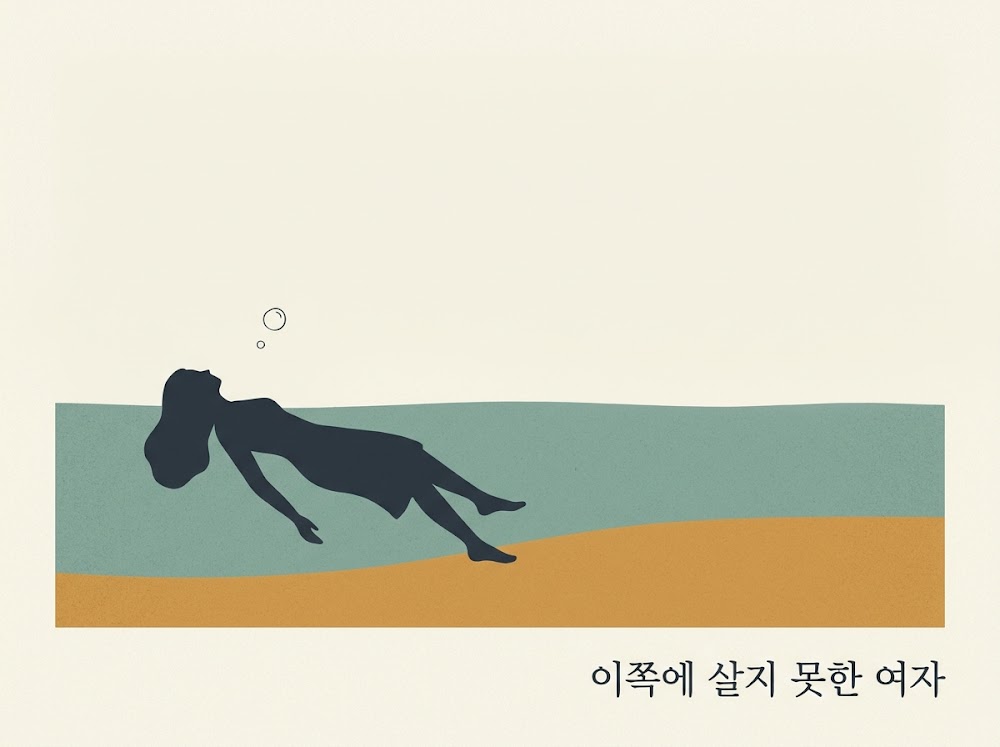
수영장에서 보면 안다. 어떤 사람은 힘을 빼도 물 위에 가만히 뜨고, 어떤 사람은 아무리 팔다리를 저어도 자꾸 아래로 끌린다. 부력은 의지의 문제가 아니다. 몸의 비중, 타고난 밀도의 문제다.
나는 오래 이걸 수영 실력 차이로만 봤다. 그런데 어떤 몸은 처음부터 물보다 조금 무겁게 태어난다. 같은 물에 들어가도 한쪽은 뜨고 한쪽은 가라앉는다. 물이 다른 게 아니라 몸이 다른 거다. 나오코를 떠올리면 자꾸 그 비중이 생각난다. 그녀는 슬픈 일을 겪어서 가라앉은 게 아니라, 애초에 이쪽 세계에 뜨기엔 너무 무거운 비중으로 태어난 사람처럼 보인다. 같은 물에서 와타나베는 떴고, 그녀는 가라앉았다.
이 글은 그 비중을 들여다보는 글이다. 그녀가 왜 죽었는가가 아니라, 왜 처음부터 이쪽에 살기 어려웠는가.
잃어서가 아니라, 닻을 내린 적이 없어서
프로이트라면 처음엔 멜랑콜리아를 떠올렸을 것이다. 사랑하던 대상을 잃고, 그 대상의 그림자가 자아에 내려앉아, 잃은 것을 자기 안에 끌어안은 채 자아가 빈곤해지는 상태. 그는 그것을 “대상의 그림자가 자아 위에 드리웠다"는 한 문장으로 적었다. 키즈키를 잃은 나오코에게 잘 맞는 그림처럼 보인다. 잃은 사람을 떠나보내지 못하고 자기 안에 품은 채 시들어가는 여자.
그런데 프로이트 자신이 그어둔 감별선이 자꾸 걸린다. 그는 멜랑콜리아 환자의 특징을 한 가지 묘하게 적어두었다. 자기를 끊임없이 헐뜯으며 떠드는, 자기 노출에서 어떤 만족을 찾는 집요한 수다스러움. 멜랑콜리아의 우울은 침묵이 아니라 오히려 시끄럽다. 환자는 자신이 얼마나 하찮은지를 남들 앞에서 쉬지 않고 고발한다.
나오코는 정반대다. 그녀는 떠들지 못한다. 말이 자꾸 막히고, 느낌과 그것을 담을 말 사이가 끊긴다. 무언가를 말하려다 그 말이 어디론가 사라지고, 자기가 지금 무슨 이야기를 하고 있었는지조차 놓친다. 프로이트는 바로 이런 것들 — 말의 해체, 비현실감, 정서의 공허 — 을 멜랑콜리아가 아니라 더 깊은 곳에 두었다. 리비도가 대상에서 완전히 철수해, 바깥의 어떤 사람이나 사물에도 더는 닻을 내리지 않고, 원시적인 무대상 상태로 물러난 자리. 거기서는 사랑할 외부가 사라질 뿐 아니라 말조차 사물처럼 다뤄져 문장이 부서진다. 그는 그것을 멜랑콜리아의 시끄러운 자기고발과 분명히 갈라놓았다.
그러니까 그녀의 무너짐은 무언가를 잃은 데 대한 반응이 아니었을지 모른다. 잃기 전부터, 그녀의 리비도는 바깥 세계에 단단히 매인 적이 없었다. 언니가 같은 나이에 같은 방식으로 죽었다는 사실이 그 비중을 가리킨다. 슬픔이 그녀를 가라앉힌 게 아니라, 가라앉는 비중이 먼저 있었고, 두 죽음은 그 비중을 수면 위로 드러낸 사건이었다. 멜랑콜리아는 잃어서 아픈 병이다. 나오코의 것은 처음부터 이쪽에 자기를 두지 못한, 더 이른 자리의 일처럼 보인다.
연약한 섬, 그리고 그 섬을 덮친 적 없는 폭풍
융은 의식을 “기만적인 무의식의 바다에 둘러싸인 연약한 섬"이라고 불렀다. 평소에는 섬이 바다를 견딘다. 우리는 매일 그 위에서 멀쩡히 걸어 다닌다. 그런데 어떤 섬은 처음부터 해수면보다 겨우 한 뼘 높다. 잔잔한 날에도 발목이 젖는다.
융은 가까운 사람이 죽었을 때, 산 자가 죽은 자의 자리로 “끌려 들어가는” 일을 적었다. 무의식이란 본래 꿈의 나라이면서 동시에 죽은 자와 조상들의 나라다. 거기 너무 깊이 얽히면 섬은 잠긴다. 그는 테세우스를 예로 들었다. 친구를 구하러 저승에 내려갔다가 바위에 몸이 붙어 영영 이승으로 돌아오지 못한 사내. 깊은 곳을 탐사하러 내려갔다가 그 깊은 곳에 묶여버리는 비극.
나오코를 여기 겹쳐 읽고 싶은 유혹이 크다. 언니가, 그리고 키즈키가 그녀를 저승의 바위에 묶었다고. 하지만 융이 이 그림을 그리면서 함께 적어둔 단서가 하나 더 있다. 이런 끌림은 흔히 잠복해 있던 정신병이 급성으로 발현하는 위험한 국면과 겹친다는 것. 즉 바다가 섬을 삼키는 게 아니라, 본래 너무 낮았던 섬이 평범한 만조에도 잠긴다는 쪽에 가깝다.
이 차이는 작다. 그러나 결정적이다. 죽은 자가 그녀를 끌고 갔다고 하면, 그녀는 정상적인 섬이었는데 유난히 거센 두 번의 파도를 만난 불운한 사람이 된다. 그러나 같은 키즈키의 죽음 앞에서 와타나베는 살아남았고, 같은 요양원의 레이코도 제 방식으로 버텼다. 같은 바다, 같은 만조였다. 한 섬만 잠겼다면, 그 차이는 파도가 아니라 섬의 높이에 있다. 융의 표현을 빌리면, 그녀의 섬은 처음부터 해수면에 너무 가까웠다. 아미 기숙사의 그 고요한 시간은 통합을 되찾은 게 아니라, 바다가 잠깐 잔잔해진 것뿐이다. 자극을 다 걷어낸 자리에서 섬은 잠시 마른 듯 보였지만, 높아지지는 않았다.
한 번 크게 흔들리면, 십 년이 돌아오지 않는다
여기서 나는 한의사로서 이제마를 펼친다. 다만 조심스럽게다. 나오코의 체질을 못 박고 싶지는 않다. 작중의 그녀는 안으로 가라앉고 말이 적고 몸이 약하니 얼핏 소음인의 결로 읽히지만, 마음이 사물처럼 굳어가는 그 멈춤은 이제마가 태음인의 겁심(怯心)을 두고 한 말에 더 가깝다. 한 인물이 두 체질의 언어에 동시에 걸린다. 그러니 체질로 그녀를 분류하려는 시도는 접고, 이제마가 말한 한 가지 결만 빌리기로 한다.
『의원론』에 이런 구절이 있다. 즐겨함이 극에 달해 이루어지지 못하면 좋아하는 마음이 정처를 잃는다. 그리고 이렇게 한번 크게 동하는 것은 칼로 장기를 한 번 베는 것과 다름없어, 한 차례 크게 흔들리면 십 년을 회복하기 어렵다고. 이제마는 이것을 사람의 생사와 수명이 갈리는 길목이라 적었다.
나오코를 이 문장 위에 올려본다. 키즈키와의 일은 그녀에게 한 번의 자극이 아니라 한 번의 절단이었다. 그리고 이제마의 말대로라면, 그런 절단은 의지로 다시 봉합되지 않는다. 십 년이 걸려도 돌아오지 않는 자리가 있다. 흥미로운 건 이제마가 이걸 외부 사건의 크기로 설명하지 않았다는 점이다. 같은 일을 겪어도 어떤 국(局)은 베이고 어떤 국은 견딘다. 베임의 깊이는 칼이 아니라 그 사람의 형세가 결정한다. 다시 비중의 이야기다. 같은 무게의 돌을 얹어도, 본래 얕게 잠긴 배가 먼저 가라앉는다.
여기서 한 가지는 분명히 해두어야겠다. 그렇다고 그녀를 둘러싼 일들이 아무것도 아니었다는 뜻은 아니다. 세 살부터 키즈키와 한 울타리에서 자라 바깥세상을 따로 마주할 필요가 없었던 시간은, 그 얕은 비중을 더 얕게 굳혔을 것이다. 두 죽음이 비중을 만든 원인은 아니어도, 이미 기운 비중이 더 빨리 가라앉게 한 가속이었다. 환경을 0으로 지우면 그것도 거짓이다. 다만 무게중심은 사건이 아니라 그녀 안에 있었다.
끊으라는 말이, 끊을 사람이 없는 자리에 닿을 때
마지막으로 불교를 펼친다. 중아함의 라운경은 사랑하는 것과 이별하는 괴로움을 이렇게 말한다. 사랑하던 것들이 흩어지고 달라져 다시 서로 모이지 못하게 될 때 괴로움이 생긴다고. 그리고 그 괴로움의 뿌리를 애(愛), 곧 집착과 물듦에 둔다. 애가 있으면 괴로움이 일어나고, 그 애를 끊어 다 뱉어내면 괴로움이 사라진다. 사랑하는 이와 헤어진 자리에서 그 사랑을 놓지 못하는 마음이 괴로움을 붙든다는 것.
나오코에게 이 그림은 절반만 맞는다. 苦의 구조는 정확하다. 그녀는 흩어진 것들을 다시 모으려는 마음을, 죽은 자들을 향한 애를 놓지 못한다. 거기까지는 라운경 그대로다.
문제는 처방 쪽이다. 불교는 애를 끊으라고 한다. 그런데 끊는다는 것은 끊을 주체를 전제한다. 손이 있어야 쥔 것을 놓는다. 나오코에게는 그 손이, 그 주체가 처음부터 온전히 서 있지 않았다. 세 살부터 키즈키와 한 회로로 자란 그녀는 키즈키와 분리된 ‘나’를 따로 세운 적이 없다. 끊어야 할 애와 끊어야 할 나가 분화되지 않은 채 한 덩어리로 있었다. 그러니 “그를 놓아라"라는 말은 “너의 절반을 잘라내라"가 된다. 절반을 잘라낸 나머지 절반이 따로 서 있다면 모를까, 그녀에게는 그 나머지가 없었다.
불교의 길은 옳다. 다만 그 길은 길을 걸을 두 발을 가진 사람을 위한 것이다. 나오코의 비극은 애가 너무 강해서가 아니라, 그 애를 끊고 남을 자기가 처음부터 거기 없었다는 데 있다. 苦滅의 처방이 그녀 앞에서 헛도는 건 처방이 틀려서가 아니라, 처방을 받을 주체가 미처 만들어지지 않았기 때문이다.
네 길이 한 자리에서 만난다
프로이트는 그녀의 리비도가 바깥에 닻을 내린 적이 없다고 말한다. 융은 그녀의 섬이 처음부터 해수면에 너무 가까웠다고 말한다. 이제마는 그녀의 국이 한 번의 절단으로 십 년이 돌아오지 않는 자리에 놓여 있었다고 말한다. 불교는 끊을 애는 있는데 끊을 주체가 없다고 말한다.
네 사람은 다른 언어로 같은 한 자리를 가리킨다. 나오코는 무언가를 잃어서 무너진 게 아니라, 애초에 산 자 쪽에 자기를 세운 적이 없는 사람이었다. 죽음이 그녀를 데려간 게 아니라, 그녀는 한 번도 이쪽에 완전히 와 있던 적이 없었다. 두 번의 죽음은 그 사실을 드러낸 방아쇠였지, 그것을 만든 원인이 아니다.
이렇게 읽으면 나오코는 더 가벼워지는가, 더 무거워지는가. 둘 다인 것 같다. 가벼워진다 — 그녀의 죽음은 누군가 밀어서가 아니라, 본래 그쪽에 가까웠던 비중이 끝내 수면 아래로 내려간 것이니. 그녀를 충분히 사랑하지 못한 누구의 잘못도 아니다. 무거워진다 — 그렇다면 처음부터 손쓸 자리가 적었다는 뜻이기도 하니. 와타나베가 더 잘했다면 그녀가 떴을 거라는 위안조차, 이 독법에서는 흐려진다.
다시, 비중
수영을 가르치는 사람들은 가라앉는 몸에게 억지로 뜨라고 하지 않는다고 한다. 대신 호흡을 길게 쥐어 폐에 공기를 채우게 하고, 천천히 힘을 빼게 한다. 비중은 못 바꿔도, 잠깐 떠 있는 순간들을 늘려갈 수는 있다는 듯이.
나오코에게는 그 잠깐의 순간들이 너무 적었다. 와타나베와 닿았던 한 번의 밤이, 어쩌면 그녀가 수면 위로 가장 높이 떠올랐던 순간이었는지도 모른다. 그러나 한 번의 들숨으로 가라앉는 비중이 바뀌지는 않는다. 그녀는 곧 다시 내려갔다.
나는 가끔 그런 사람을 생각한다. 슬퍼서 가라앉은 게 아니라, 그저 이쪽 물에 뜨기엔 너무 무거운 비중으로 태어난 사람. 그들에게 “조금만 더 힘내라"는 말이 얼마나 가닿지 않는지를. 비중은 게으름이 아니다. 나오코는 노력이 부족했던 게 아니라, 처음부터 이쪽에 살기 어려운 몸이었다. 그걸 인정하는 것이, 그녀를 가장 덜 모욕하는 읽기인 것 같다.
— 최장혁 —
You can tell at the swimming pool. Some people let go of tension and stay floating on the surface without effort; others, no matter how much they kick and stroke, keep being pulled downward. Buoyancy is not a matter of will. It is a matter of the body’s specific gravity—the density one is born with.
For a long time I thought of this only as a difference in swimming ability. But some bodies are born, from the start, a little heavier than water. In the same pool, one floats and the other sinks. The water is not different; the body is. When I think of Naoko, that specific gravity keeps coming back to me. She seems not to have sunk because sad things happened to her but to have been born with a density too heavy to stay afloat on this side. In the same water, Watanabe floated and she sank.
This essay looks at that density. Not why she died, but why, from the beginning, it was difficult for her to live on this side.
Not From Loss, But From Never Having Anchored
Freud would first have thought of melancholia. The state in which someone has lost a loved object, and the shadow of that object has descended on the ego, and the ego grows impoverished while holding within itself what it has lost. He put this in a single sentence: the shadow of the object has fallen on the ego. It looks like a fitting picture for Naoko after losing Kizuki—a woman who cannot let go of the person she lost and withers as she holds him inside herself.
But a diagnostic line Freud himself drew keeps catching me. He noted one peculiar feature of the melancholic patient: an incessant, garrulous self-flagellation, finding some satisfaction in self-exposure. Melancholic depression, he observed, is not silent—it is noisy. The patient accuses herself before others of her own worthlessness without rest.
Naoko is the opposite. She cannot talk. Words keep stopping, the connection between a feeling and the words that could carry it keeps breaking. She reaches for something to say and the words disappear somewhere, and she loses track of what she had even been saying. It was precisely these things—the dissolution of speech, the sense of unreality, the hollowness of affect—that Freud placed not in melancholia but somewhere deeper. The place where libido has withdrawn completely from its objects, no longer anchoring itself to any person or thing in the outer world, retreating to a primitive, objectless state. There, not only does the capacity to love an outside disappear—even words are treated like objects, and sentences break apart. He drew a clear line between this and melancholia’s noisy self-accusation.
Her collapse, then, may not have been a response to loss. Before there was any loss, her libido may never have been firmly moored to the outer world. The fact that her sister died the same way at the same age points toward that density. Grief did not pull her under; the pulling density was there first, and the two deaths were events that brought that density to the surface. Melancholia is illness from loss. What Naoko had looks more like something earlier—a place where she was never able to seat herself on this side to begin with.
The Fragile Island, and the Storm That Never Struck It
Jung called consciousness “the fragile island surrounded by the deceptive sea of the unconscious.” Ordinarily the island holds against the sea. We walk on it every day without incident. But some islands are born with barely a hand’s breadth above sea level. Even on calm days, the water reaches their ankles.
Jung wrote about the living being “pulled into” the place of the dead when someone close to them dies. The unconscious is by nature the land of dreams and simultaneously the land of the dead and the ancestors. Too deep an entanglement in it and the island submerges. He used the example of Theseus—the man who descended to the underworld to rescue a friend and found his body fused to a rock, unable ever to return to the land of the living. The tragedy of descending into the depths and being held there.
The temptation is strong to lay Naoko over this image—to say that her sister, and then Kizuki, chained her to that rock. But Jung noted one more caveat alongside this picture: such a pull commonly overlaps with the dangerous phase in which a latent psychosis becomes acutely manifest. Which is to say, less that the sea swallowed the island than that an island already too low was submerged by an ordinary high tide.
This difference is small. But it is decisive. If we say the dead pulled her down, she becomes an island that was normal until she met two unusually violent waves. Yet Watanabe survived the same death of Kizuki, and Reiko found her own way to hold on at the same sanatorium. Same sea, same tide. If only one island sank, the difference lies not in the wave but in the island’s height. In Jung’s terms, her island was, from the start, too close to sea level. The quiet of the Ami sanatorium was not integration regained; it was simply a moment when the sea happened to be calm. The island looked momentarily dry when all stimulation was stripped away, but it had not risen.
One Great Shaking, Ten Years Won’t Return
Here I open Yi Je-ma, though carefully. I have no wish to pin down Naoko’s constitution. Within the novel she is inward, soft-spoken, and physically frail—which at first glance suggests the grain of the Soeum type; but the way her mind solidifies and stops, like matter hardening, comes closer to what Yi Je-ma said about 怯心 (gyeopsin—the fearful, contracting heart) in the Taeeum type. One character falls under the language of two constitutions at once. So I set aside the attempt to classify her by constitution and borrow only one thing Yi Je-ma said.
The 醫源論 (Uiwonron, “On the Origin of Medicine”—a chapter in Yi Je-ma’s 東醫壽世保元, Dong-ui Susebowon) contains this passage: when joy reaches its extreme and cannot be fulfilled, the loving heart loses its ground. And such a great disturbance is no different from a knife cutting through an organ—一次大動十年難復, “one great shaking, ten years will not bring recovery.” Yi Je-ma marked this as the crossroads where human life and death, longevity and brevity, diverge.
Place Naoko on top of this sentence. What happened with Kizuki was not one more stimulus for her—it was one cut. And by Yi Je-ma’s words, that kind of cut is not sealed back by force of will. There are places that do not return even in ten years. What is interesting is that Yi Je-ma did not explain this by the scale of the external event. The same event, and some 局 (guk—constitutional structure) are cut while others hold. How deep the cut goes is decided not by the knife but by the person’s own condition. The specific gravity again. Place the same weight of stone in two boats, and the one that was already riding low will go under first.
One thing must be said clearly here. This does not mean that what surrounded her was nothing. The years she grew up within one enclosure with Kizuki from the age of three, never having to face the outside world separately—those years would have hardened her already shallow density shallower still. The two deaths were not the cause of her density, but they were the acceleration that made an already tilted weight sink faster. To zero out the environment would itself be false. Only the center of gravity was inside her, not in the events.
When the Command to Cut Arrives Where There Is No One to Cut
Last, I open Buddhism. The Rāhulasutta in the 中阿含經 (Madhyama-āgama, the Middle Length Discourses in the Chinese canonical tradition) describes the suffering of parting from those one loves: when things once loved scatter and change so that they can no longer come together again, 苦 (go; Sanskrit: dukkha—suffering) arises. And it locates the root of that suffering in 愛 (ae; Sanskrit: tanhā—craving and attachment, the clinging to what was loved). While 愛 remains, suffering arises; cut and expel that 愛 entirely, and 苦 ceases. What holds on to the dead and will not release them is what holds suffering in place.
For Naoko this picture is half right. The structure of 苦 is accurate. She cannot release the mind that seeks to re-gather what has scattered—the 愛 directed toward the dead. So far it follows the sutra exactly.
The problem is on the prescription side. Buddhism says: cut the 愛. But cutting presupposes a subject who can cut. You need a hand to release what a hand is holding. In Naoko, that hand—that subject—was never fully established to begin with. Having grown up as one circuit with Kizuki from the age of three, she never set up a separate “I” apart from Kizuki. The 愛 that needed cutting and the self that was supposed to do the cutting were not differentiated; they existed as one undivided mass. So “let him go” becomes “cut away half of yourself.” If the remaining half could stand on its own, that would be one thing—but for her, that remaining half was not there.
The Buddhist path is right. But that path is for someone who has two feet to walk it with. Naoko’s tragedy was not that her 愛 was too strong. It was that the self which would have remained after cutting that 愛 was never there to begin with. The prescription of 苦滅 (gomyeol; nirodha—the cessation of suffering) spins in place before her not because the prescription is wrong but because the subject to receive it had not yet been made.
Four Paths, One Meeting Point
Freud says her libido never anchored itself in the outer world. Jung says her island was too close to sea level from the start. Yi Je-ma says her 局 was in a place where one great shaking left ten years unable to return. Buddhism says the 愛 to be cut is there, but there is no one to cut it.
Four different languages, one place. Naoko did not break down because she lost something. She was someone who had never fully placed herself on the living side to begin with. Death did not take her away; she had never entirely arrived on this side. The two deaths were the trigger that revealed that fact—not the cause that created it.
Read this way, does Naoko become lighter or heavier? Both, it seems. Lighter—because her death was not because someone failed her but because a density that had always tilted toward the other side finally sank below the surface; no one’s failure to love her enough is to blame. Heavier—because if this is true, there was little room for intervention from the start. Even the consolation that if Watanabe had done better she might have floated—that too fades in this reading.
Back to Specific Gravity
Swimming instructors, I am told, do not tell a sinking body to just float. Instead they have the person hold a long breath to fill the lungs with air, and slowly let the tension go. As if to say: specific gravity cannot be changed, but the moments of staying afloat can be made a little longer.
For Naoko, there were too few of those moments. The one night she touched Watanabe may have been the highest she ever surfaced above the waterline. But one held breath does not change a sinking density. She went back down again soon after.
I sometimes think about people like that. People who sink not because they are sad but because they were simply born with a density too heavy to stay afloat on this side. How little the words “just try a little harder” reach them. Specific gravity is not laziness. Naoko was not someone who tried too little; she was, from the start, a body for which this side was difficult to live in. Acknowledging that is, I think, the reading that least insults her.