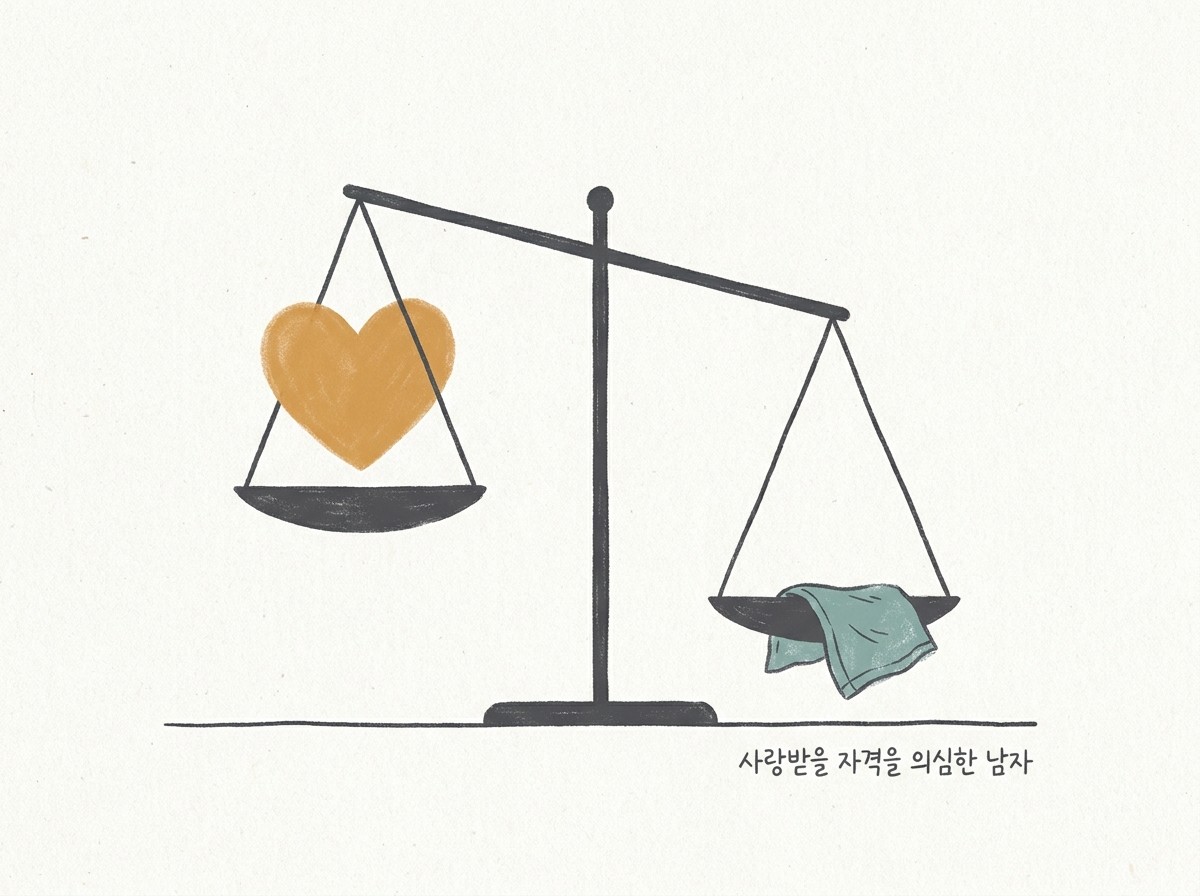
These days the word “self-esteem” turns up everywhere. Raise your self-esteem, love yourself. And yet it is surprisingly hard to say what low self-esteem actually is. There is one clear symptom: being loved and unable to believe it. When someone says they truly care for you, certain people feel, before any gratitude, a small suspicion—why me? For them love is not something to enjoy but something to watch, waiting for the moment it breaks.
In the end “self-esteem” comes down to how I see myself. But seeing oneself is a strange business. The one who looks and the one who is looked at are the same person; how is anyone to measure that with any objectivity? So we are always borrowing a mirror from outside—gauging ourselves by whether someone loves us, by how others treat us. This is where the trouble divides. How tightly are we bound to that mirror. What do we do with the poor figure it shows us. And—is the “I” the mirror reflects really fixed at all.
Shakespeare made a man who pushed this question all the way to the end. We remember him as the very figure of jealousy: Othello. But look at him long enough and the jealousy turns out to be only the surface. Beneath it lies a far older doubt. Could a man like me really be loved.
That first mirror—the way self-esteem hangs on love from outside—was seen first, and most coldly, by Freud. He took self-esteem not as a frame of mind but as a ledger of love coming in and going out. In his essay on narcissism he says a curious thing: a person in love grows humble. To love someone is to let something of oneself flow over to them, so that the lover is always a little the poorer, and that empty place can be filled by one thing only—having the love returned. Even the standard by which we measure ourselves, he held, did not well up from inside but was driven in from outside. From the very start we look at ourselves in a borrowed mirror.
The trouble is that Othello is a man whose body cannot take that love in. He carries an image that has followed him all his life—the honored general Venice took to itself. But beneath that image is another self: the outsider who has never fully belonged anywhere. Desdemona’s love could have closed that distance. Instead, that very love arrives as a problem he cannot solve. A man like me—why would she. The more love comes in, the more he suspects it rather than enjoys it, because anything too far above one’s worth must be a lie, or must soon vanish. So he goes looking for the evidence that will bring him down. It looks like self-destruction, but it is in fact a defense: “her love was real” is harder to take in than “of course it was never real,” and only the second leaves untouched the self he has believed in all his life. That is why he falls so easily. A single handkerchief is evidence a sound man would laugh off. To Othello it is the evidence he has been waiting for all along. He was not deceived; he was granted permission, at last, to believe what he already believed.
If Freud’s mirror was the love coming in from outside, Jung holds up a different mirror—the image of oneself reflected in that love. Where Freud drew Othello as a man who cannot take in love, Jung draws the same man as one who cannot take in himself. Othello has one face that has held him up his whole life: the general. On the field, in the seat of command, he is without flaw. The social face we all wear, Jung said, is not properly our own but a mask the group has lent us; and the more a man becomes one with his title, the more there tends to be, beneath the mask, something small and pitiable. He adds a line: a man who is “strong” in public is often, in private life, a mere child—the discipline he demanded so fiercely of others collapses wretchedly in the intimate room. So it is with Othello. A man who knows only how to meet people by command stands defenseless before the one realm where command does not reach—love.
In that place, where the mask fails, what he meets is the darkest line within himself: I do not deserve to be loved. The part we cannot bring ourselves to own, Jung held, does not disappear. It becomes the shadow, and the shadow is always thrown onto someone outside. What is unconscious in us we discover in our neighbor, he wrote, and treat him accordingly. Othello never manages to look at “I am the one who falls short.” Instead he turns it over. It is not I who am wanting; it is she who is false. An unbearable self-loathing converts, just like that, into a bearable rage. Jung’s borrowed phrase—the “pale criminal,” the one who can never admit what he is—fits here exactly. In this light Iago is less an outside villain than Othello’s own dark voice. All he really does is put into plain words what Othello already believed in the dark. “Honest Iago” sounds honest to Othello’s ear alone, because it is nothing other than Othello talking to himself.
And the projection does not stop at accusation. The moment he lays his own poor self over her, Desdemona is no longer a woman outside him. She becomes a part of him. And so he cannot leave her—any more than he can flee himself. Why he chooses, instead of leaving, to kill, and what exactly it is she now carries of him—Jung names in a single word. Every man carries within him an image of woman, and because it is unconscious it is forever projected onto the one he loves. What Othello loved in Desdemona was the tenderness he had never once let live in himself, the being-received, the laying-down of arms. The trouble is that the projected image cannot be controlled. Jung called it a self-feeding thing that knows nothing of relationship, that seeks only to possess the person whole. The more he loves, the more powerless he grows, for a piece of his own soul is held in that woman’s hands. There is only one way to end such powerlessness: to destroy it. When he closes his hands on Desdemona’s throat, what he is killing is the uncontrollable tenderness inside himself. The scene where he stands over her as she sleeps, the candle in his hand, hesitating—snuffing first one light and then the other—is less the wavering of a murderer than the wavering of a man about to put out, with his own hand, the last light in himself.
And yet neither Freud nor Jung touches one thing. Both begin by assuming there is a “self.” A self-esteem to be filled, a shadow to be integrated, and an “I” that owns them all. Buddhism doubts precisely that assumption. Does a man like me deserve to be loved—Othello’s question takes for granted that an “I” able to be measured for worth stands fixed somewhere. But what the Diamond Sutra repeats to the end is that so long as one clings to the mark of a self and the mark of others, one is not yet awake. The very thought that there is a fixed “I” to be weighed is already attachment. An older scripture says it more plainly: to take there to be a self where there is none—this is the upside-down seeing.
Seen with this eye, Othello’s tragedy is not that he lacked the worth to be loved. It is that he could not, for a single moment, stop weighing that worth. Before Desdemona’s love he sets himself endlessly on the scales. Am I her equal, why would she want me, can this be real. The weighing itself is the suffering. It was not a low score that killed him but the act of scoring at all, wearing him away. So the way out Buddhism points to is not “you are worthy.” That is merely a better score—still on the scales. The way out is to see that there is no fixed “you” to be weighed in the first place: to step down off the scales. Othello never does. To his last breath he is still measuring himself. Set me down thus, he asks—one who loved not wisely but too well. To the final breath he cannot let the mark of “I” out of his hands.
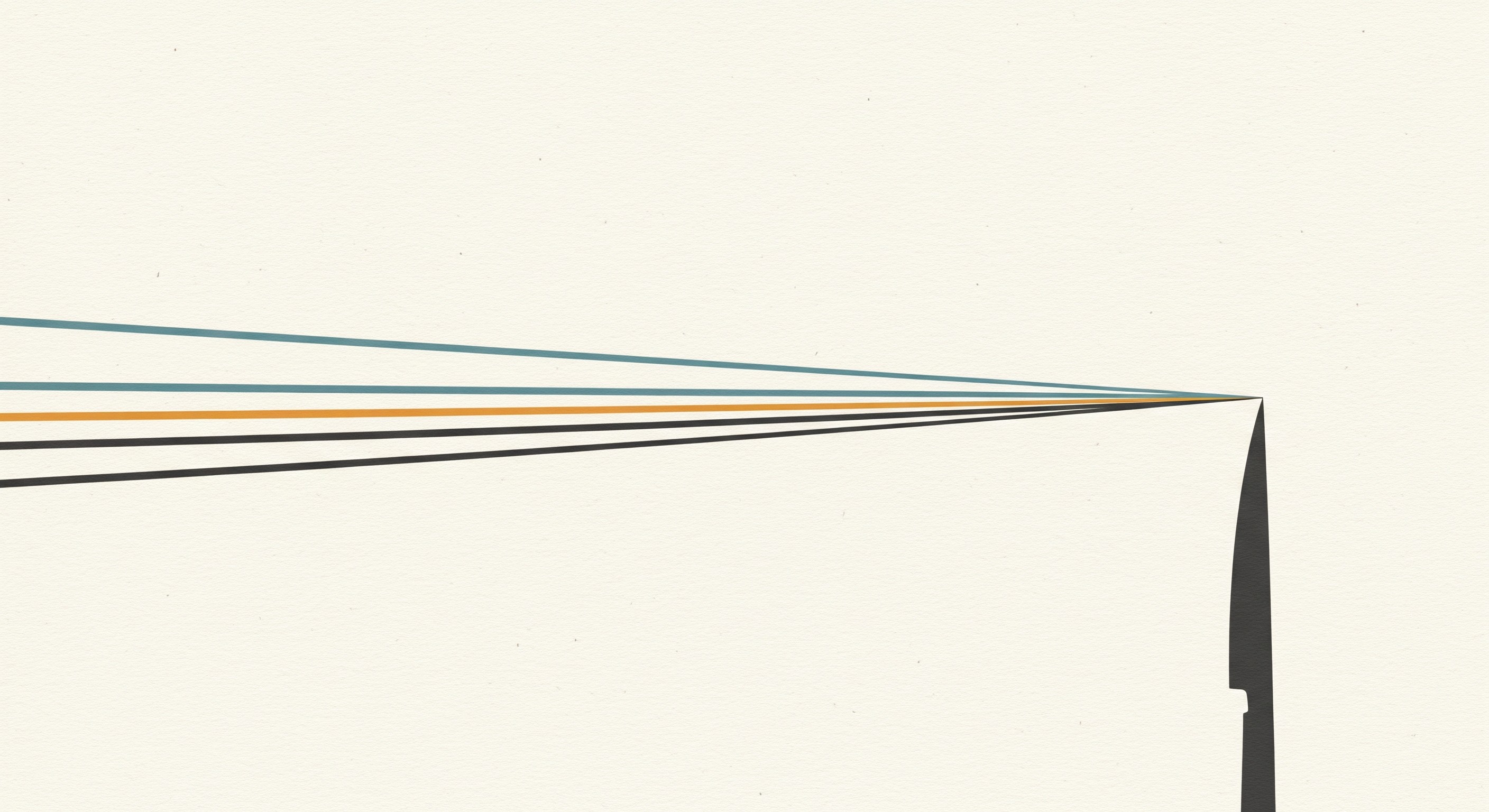
Three mirrors converge on a single point. Freud’s mirror was a borrowed love, and Othello could not take its light in. Jung’s mirror showed the poor figure he could not bear to see, and he laid it over Desdemona and shattered it. Before Buddhism’s mirror he never managed to see that the “I” meant to be reflected there was, from the first, an illusion. What killed Othello was not jealousy. It was the mind that could not believe in itself—more exactly, the mind that could not stop weighing itself—that destroyed the love. When he learns the truth and drives the blade into his own breast, that blade proves one thing, too late: whom the rage aimed at Desdemona had been pointing at from the very beginning. Not her, but the self he had believed, all his life, unworthy of her love.