On the late-night subway there is a certain moment. The window goes black, and the glass turns into a mirror. You are staring blankly at the person across from you when, in the pane beside them, you catch sight of someone’s slumped shoulder and downturned mouth. Not much to look at, you think. A face gone wrong somewhere, falling short somewhere. It takes half a beat to realize the someone is you. Once you do, your expression usually softens. Ah. It’s me. In that half a beat we do one small thing: we take the stranger in the glass back into ourselves, grant the slumped shoulder its reasons, forgive the downturned mouth. It is nothing. It happens dozens of times a day and passes, every time, without incident.
Richard of Gloucester is a man who never managed that half a beat.
The play opens with him alone on the stage, taking his own body apart. He was cheated of fair proportion, swindled by nature, sent into the world before he was finished, limping. Even dogs bark when he passes. After dismantling himself at length, he reaches his conclusion: since he cannot be a lover, he will be a villain. I am determined to prove a villain.
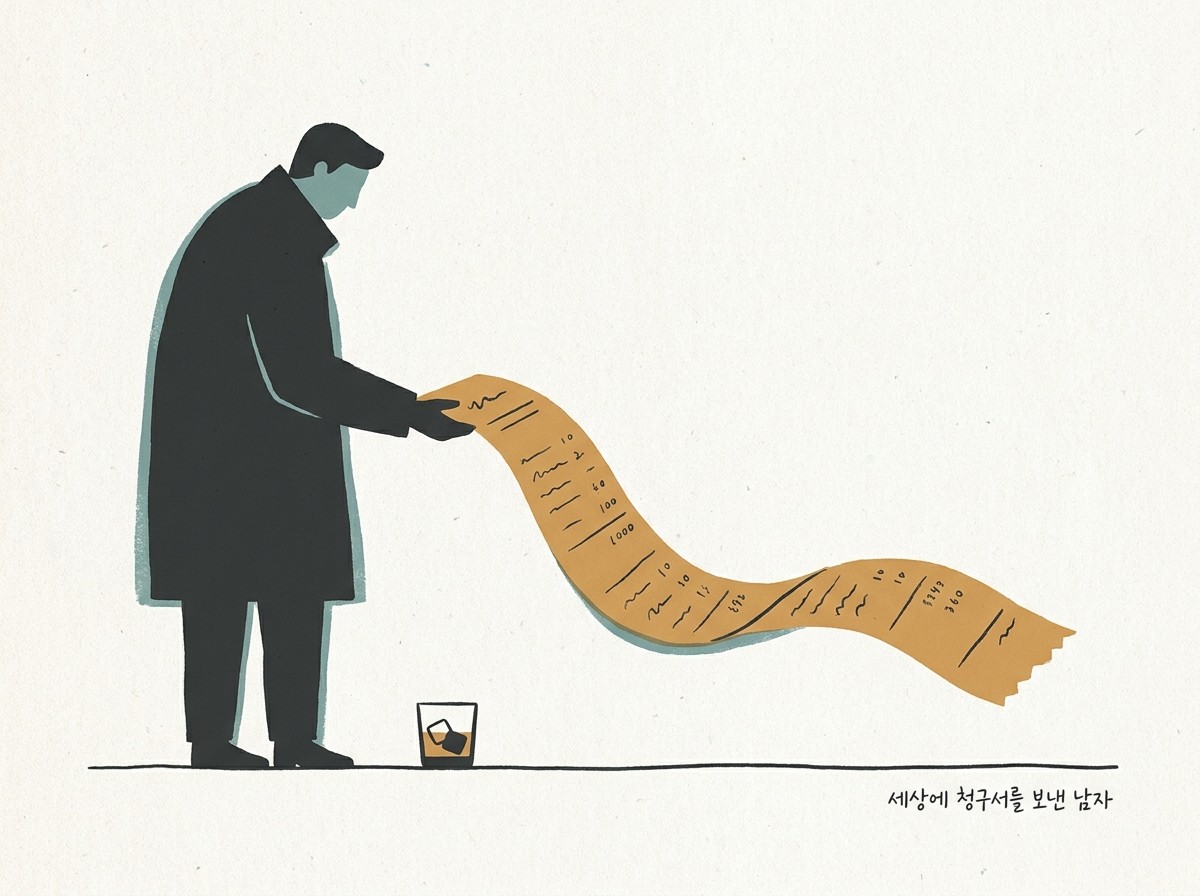
In this speech the one he is persuading is not the audience but himself. The crookedness is real—his body did in fact push him outside the reach of love. But from that fact he takes one step further: since wrong was done to me unjustly, I too may do wrong. I may do wrong myself, since wrong has been done to me. The injury has issued a right. Nature owes me a debt, so I am entitled to collect—this single line he keeps as the first page of his bill. A man who turns a childhood wound into a writ of unjust privilege is the kind Freud called one of “the exceptions,” and his prime example was Richard himself. Yet there is one thing Freud did not trouble to mark: the wrong did not come first. What came first was the decision to enter it in the ledger.
What he was given was not only the crooked back. The same body came with a startlingly quick mind—one that could turn a knife of hatred into desire with a sentence, read a room before it spoke, move its hand without flinching. Weakness and gift were born in the same place. It is always so. Everyone is born tilted some way, and the strong side and the weak side are the front and back of one tilt. Poor, small, slow, plain—the direction differs, but no one is born level. So what made Richard exceptional was not what he was given. It was what he did with it.
To see what he did with that mind, look at Anne. Over the coffin of the father-in-law he killed, to the widow whose husband he also killed by his own hand, he makes his suit. He kneels, presses the blade to his own chest, begs her to strike, and turns hatred into desire in a single stroke. And the moment she leaves, he muses to himself—was ever woman in this humour wooed, ever won; he will have her, but not keep her long. Between the kneeling ardour and the cold turning-away there is nothing. The tongue is that sharp, and the seat of feeling just behind it is empty. Hone one side that far and the opposite stays undeveloped, left in shadow; and the man who never takes that shadow in as his own, Jung wrote, ends by becoming the shadow itself. Clearing away a brother, a nephew, an ally one after another, Richard climbs toward the throne, and the higher he climbs the more alone he becomes, the larger, the further off. On the last field what surrounds him is not the enemy but the space he has emptied.
And yet a man with a crooked back does not necessarily become Richard. There are plenty who carried the same injury and never wrote the bill. So the back is not the cause that made him a villain. To be born tilted is fate; what one becomes from the tilt is not—and it was just this fork that Yi Je-ma spent his life watching. He saw each person’s inborn lean not as a sentence handed down but as a slope. A slope only makes it easier to slide one way; it can be walked in either.
Richard walked his slope the same way every time. With Anne, with his brother Clarence, with the two children in the Tower, with yesterday’s ally Hastings—the same single line runs each time. I was wronged, so this is only fair. Walk it once, walk it twice, and a rut wears under your feet. From the third time on, the rut pulls the foot. The bill he wrote at first becomes, somewhere along the way, the thing that writes him. We tend to say a man like this is simply lacking, but Richard is the opposite. A duller man would have wavered once or twice and stopped. Because he was clever, each time he argued that one line more plausibly; and the better the mind, the deeper and smoother the rut wore. What carried him to the end was not his deficiency but his brilliance.
While the rut was still shallow, there was, each time, a half a beat in which to climb out. Just before entering “I was wronged,” a half a beat in which to turn and say: this is not a debt owed me, only the lean I was given. It is the very same motion as taking the slumped shoulder in the glass back as your own. Yi Je-ma, too, set this down not as some grand repentance but as a single beat just before the act goes out—an endless thing, with nowhere to arrive, returning each time to the start. For Richard that half a beat was there in every scene. Not once did he take it.
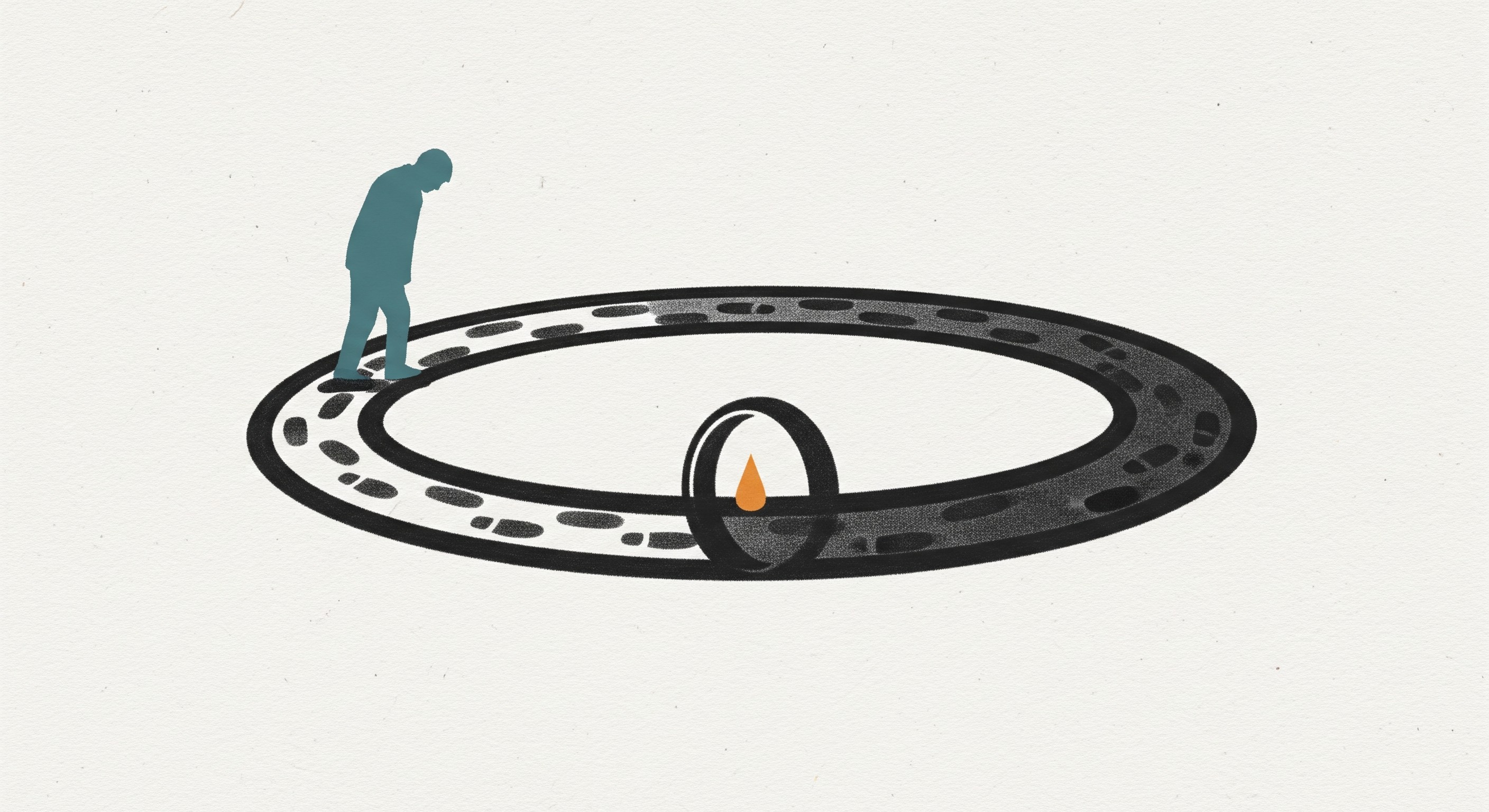
The more he refused to stop, the faster the killing goes. With Clarence there was still hesitation and pretext; by the two children in the Tower the order is short and dry. A risen impulse becomes a deed, the deed steeps the seed again and swells the next impulse, the swollen impulse becomes another deed—the same wheel turns faster and faster. An old Buddhist teaching holds that the mind turns exactly like this: a seed lying low rises into act, the act steeps the seed and hardens it further, and what hardens, accumulating, at last devours its owner. If the three before each touched one place on Richard with a different fingertip, this teaching says that place was in fact a single turning wheel.
And a wheel has an axle. One point for the seed to cling to as “what was done to me”—the axle called “I.” While that axle is driven in, the wheel turns. What this teaching points to at the last is not pulling the seeds out one by one but drawing the axle. See that the “I” to cling to is empty from the start, and there is no place left to harden.
The closest Richard came to that axle was the last night. In the dawn after the ghosts of the dead had filed through, he wakes in a cold sweat and asks himself: whom do I fear—myself? There is no one here. Then he calls his own name twice. Richard loves Richard; that is, I am I. And in the very next breath the “I” splits. I am a villain: yet I lie. I am not. I am a villain—no, that is a lie, I am not. The axle that had never once trembled in his life slips, that dawn, for the first time. The wheel halts a moment. Through the gap a half a beat opens.
He drives it back in. Richard loves Richard, I am I—harder. The door that had opened closes, so, in his own hand. And gathering up in one armful that “I” he has gripped to the end, he runs—a horse, a horse, my kingdom for a horse—into the vacuum he has emptied.
On the subway at night I look again at my own slumped shoulder in the glass. Half a beat later, I forgive it. I grant that it is me, give it its reasons, let my face relax. It is nothing. And yet, after looking long at Richard, that half a beat no longer looks like nothing. To take the lean you were given and, instead of entering it as “I was wronged,” simply receive it once as your own—that small thing may be the smallest turning-back we perform, absentmindedly, every day. The one half-beat Richard never performed, we perform dozens of times a day, without knowing.